Your healthcare provider gave you a stoma (new opening for stool to pass from the body) during surgery. Stool starts to pass from the stoma soon after surgery. That means you’ll need to learn how to change your pouch before you go home. Depending on the type of pouch system you have, you may need to change your drainable pouch from daily to every week. Generally, the pouch needs to be emptied whenever it is 1/3 full and changed every 2 to 4 days. Your healthcare provider will guide you better about how often you need to change the colostomy pouch. To change your pouch, follow the steps below. Start by gathering what you’ll need:
-
Plastic bags
-
Soft washcloth
-
Toilet paper
-
New pouch
-
Extra skin protection
-
Scissors (if needed)
-
Clean towel
1. Remove the used pouch
Wash your hands well for 20 seconds with soap and water before removing the pouch. Steps to removing the used pouch are as follows:
-
If you use a drainable pouch, empty it first. Sit on or next to the toilet. Set the clamp aside.
-
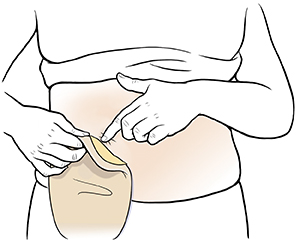
Start at the upper edge of the skin barrier. Carefully push the skin away from the skin barrier with 1 hand. Slowly peel back the skin barrier with the other hand.
-
Peel all the way around the skin barrier until the pouch comes off.
-
Seal the pouch in a plastic bag. Then put it in a second plastic bag. Throw it away in a trash bin. Some people empty the pouch into the toilet first.
2. Clean around the stoma
Steps to cleaning around the stoma are as follows:
-
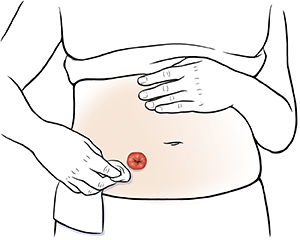
Wipe any stool off the skin around the stoma with toilet paper.
-
Clean the skin with warm soap and water and a clean washcloth. Wash right up to the edge of the stoma. Pat the skin dry with a clean towel.
-
If needed, put on extra skin protection, such as moisture barrier paste, cream, or powder.
3. Put on the new pouch
Steps to putting on the new pouch are as follows:
-
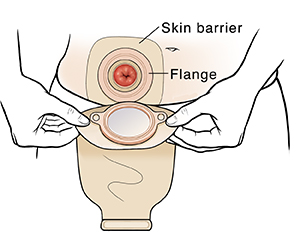
If you don’t use a pouch with a precut skin barrier, size and cut the opening (no more than 1/8 inch bigger than the stoma) and peel the backing off the skin barrier. Carefully place it over the stoma.
-
If you use a 2-piece pouch, snap the pouch onto the barrier. Start at the bottom and work your fingers around the flange.
-
Press the barrier against your skin with your hand over the barrier and hold it in place for 45 seconds. This molds the barrier to your skin.
-
If you use a drainable pouch, clamp the tail.
-
Wash your hands for at least 20 seconds when you are done. (Hum Happy Birthday twice if you need a timer.)
Call your healthcare provider or ostomy nurse
Call if any of these conditions occur:
-
The skin around the stoma is red, weepy, bleeding, or broken.
-
The skin around the stoma itches, burns, stings, or has white spots.
-
The stoma swells, changes color, or bleeds without stopping
-
The stoma changes size, becomes even with, or sinks below the skin, or sticks up more than normal.



