A common way to treat symptoms of Ménière’s disease may be to eat less salt. Salt contains sodium. Sodium makes your body hold extra fluid. Because Ménière’s disease is caused by a buildup of fluid in the inner ear, eating less sodium may help ease your symptoms.
Sodium is one of the main ingredients in table salt. It's found naturally in most foods. But most of the sodium you eat is added to your food when it is made in a factory or restaurant. So it’s easy to get more than you need. How do you know how much sodium a food has in it? Food nutrition labels are a good place to start. Food nutrition labels show how much sodium, cholesterol, dietary fiber, and calories are in each serving. They will also tell you how many servings are in each container, as well as how many different types of fat are in the food.
A common recommendation is to limit sodium to no more than 1,500 mg to 2,000 mg each day. This is the amount of sodium in about ¾ to 1 teaspoon of table salt. Your health care provider can tell you how many milligrams (mg) of sodium are OK to eat each day.
Tips for eating less salt
-
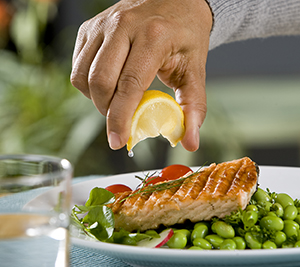
Don’t add salt to food when you’re cooking. Season foods with flavorings such as lemon, pepper, garlic, onion, and dried herbs instead.
-
Take the saltshaker off the table. Replace it with salt-free herb mixes, spices, and salt substitutes.
-
Get a cookbook of low-salt recipes. It can give you ideas for healthy and great-tasting meals.
-
Choose low-salt snacks such as no-salt pretzels or crackers, air-popped popcorn, or low-fat frozen yogurt.
-
Don't use condiments high in sodium. These include mustard, relish, ketchup, soy sauce, and Worcestershire sauce.
-
When you eat out, ask that your food be cooked without added salt. Watch out for fast foods. These are often heavily salted.
-
Read labels before buying any food that isn’t fresh. Check the label for the milligrams of sodium in each serving. Watch out for high-sodium ingredients such as baking soda.
-
Don't eat foods that are pickled, smoked, or packed in brine or broth.
-
If you buy antacid tablets, choose a sodium-free brand.
-
Certain toothpastes, mouthwashes, and medicines may have salt added. Ask your pharmacist to recommend low-salt substitutes.



