Dismiss Modal

Treatment

Your Child's Asthma: Inhaled Medicines

Choose a preferred language

Your child will most likely have at least one inhaled asthma medicine. The medicine is given with an inhaler or a nebulizer. It's very important to use these correctly so that your child gets the right amount of medicine. To make sure that you're using them right, show the health care provider, nurse, or pharmacist how you use them. If you need more directions, they can help you.


Inhalers with spacers

An inhaler gives the medicine in a fine spray. A spacer is a tube with a mouthpiece that can be attached to the inhaler. It helps more medicine get into the lungs. To use an inhaler with a spacer, follow the package directions. If you have questions about the right way to use it, ask your child’s provider.

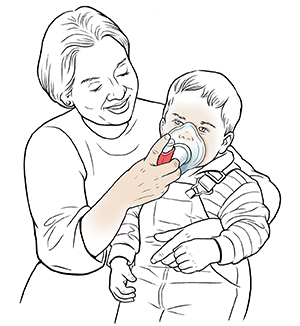
For infants and toddlers, a mask with a spacer is used. Your child's provider can show you the best way to use an inhaler with a mask.
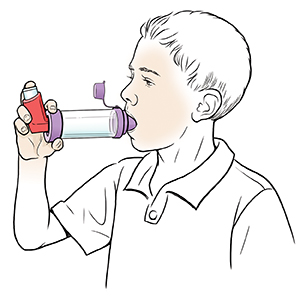
Boy using metered-dose inhaler with spacer.Woman holding toddler boy on lap and helping him breathe through mask with metered-dose inhaler.


Dry powder inhalers

This type of inhaler releases medicine in tiny grains of powder. No spacer is needed. To use this type of inhaler, your child must be able to take a quick, deep breath. Read the package insert to learn how they should use this inhaler. Make sure to check the method with your child's health care provider.
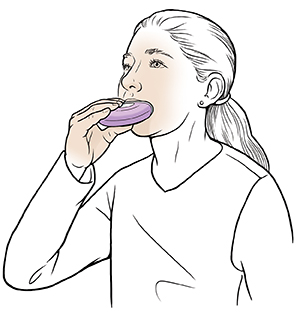
Young woman using dry powder inhaler.


Nebulizers

A nebulizer turns medicine into a fine mist. The medicine is given through a mouthpiece or mask that fits on the face. Getting the full dose may take up to 15 minutes. It can sometimes take longer if two medicines are used together. Nebulizers are sometimes used for infants or toddlers. They are often not needed if a child is able to use an inhaler with a spacer correctly.
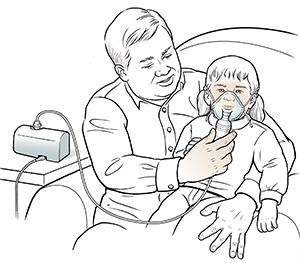
Man holding toddler on his lap and helping the child breathe through a nebulizer mask.

Featured in

© 2000-2025 The StayWell Company, LLC. All rights reserved. This information is not intended as a substitute for professional medical care. Always follow your healthcare professional's instructions.

Make an Appointment

Make an Appointment

Find a Doctor

Find a Doctor

Find a Location

Find a Location
Related Articles
Read article
Lung Health
Your Child’s Asthma: Medicines

Medicines are an important part of managing asthma. Ask your child's health care provider about your child's asthma medicines. Find out how they work, how they're taken, and what their possible side effects are. Read on for some helpful info to get you started.

Read article
Lung Health
Your Child's Asthma: Away from Home

Your child will likely spend time at the homes of family and friends, at daycare, or at school. Read on to learn what you can do to make it easier for your child and for those who care for them.

Read article
Lung Health
Asthma and COPD: Controlling Other Triggers

The weather. Food additives. Illness. Many things may set off your asthma symptoms. Here's a look at some common asthma triggers, and tips to help ease your symptoms.

Read article
Lung Health
Your Child’s Asthma: Is It Under Control?

If your child's asthma treatment isn't working, don't give up! With the right plan, asthma can be controlled.