Bronchitis is inflammation or irritation of the airways (bronchi). The inflamed, damaged lungs make more mucus than they should. People with chronic bronchitis often cough up mucus. They also have trouble breathing.
Chronic means that a condition is ongoing for a long time. You may have chronic bronchitis if you cough up mucus for at least 3 months each year, 2 or more years in a row, without another diagnosis to explain the cough.
Chronic bronchitis is one type of Chronic Obstructive Pulmonary Disease (COPD). The other is emphysema.
Healthy lungs
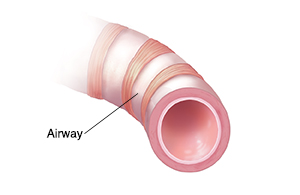
This is what happens when your lungs are healthy:
-
Inside the lungs are branching airways of stretchy tissue. Each airway is wrapped with bands of muscle that help keep it open. Air travels in and out of the lungs through these airways.
-
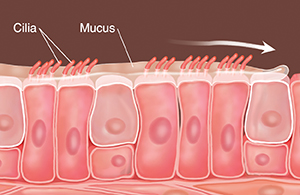
The cells in the lining of the airways produce a sticky fluid called mucus. This traps dust, smoke, and other particles in the air you breathe and helps protect the lungs.
-
Tiny hair called cilia then sweep the mucus up the airways to the throat, where it is swallowed or coughed up, again to protect the lungs.
When you have chronic bronchitis
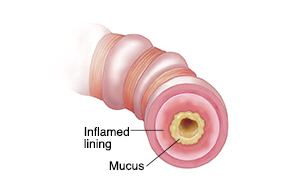
This is what happens when you have chronic bronchitis:
-
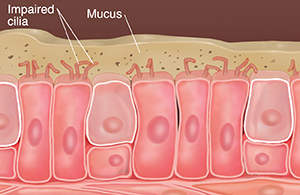
Cells in the airways make more mucus than normal. The mucus builds up, narrowing the airways. This means less air travels into and out of the lungs.
-
The lining of the airways may also become swollen (inflamed). And the muscle surrounding the airways may tighten (constrict). These problems cause the airways to narrow even more.
-
The cilia may also be damaged. This means they can’t sweep mucus and particles away. This damage makes the problems described above even worse.
-
The extra mucus gets collected and increases the risk of lung infections.
How daily issues affect your health
Many things in your daily life impact your health. This can include transportation, money problems, housing, access to food, and child care. If you can’t get to medical appointments, you may not receive the care you need. When money is tight, it may be difficult to pay for medicines. And living far from a grocery store can make it hard to buy healthy food.
If you have concerns in any of these or other areas, talk with your health care team. They may know of local resources to assist you. Or they may have a staff person who can help.



