Cubital tunnel syndrome is a set of symptoms that may occur if the ulnar nerve in your elbow gets pinched. This may happen if you bend or lean on your elbows often.
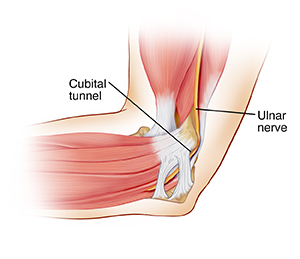
Your cubital tunnel
The cubital tunnel is a groove in a bone near your elbow. This narrow groove provides a passage for the ulnar nerve. This is one of the main nerves in your arm. The ulnar nerve can cause “funny bone” pain if your elbow gets bumped. Your cubital tunnel helps protect this nerve where it goes through your elbow and down to your fingers.
Compressing the ulnar nerve
Bending your elbow compresses the ulnar nerve inside the cubital tunnel. The nerve can get inflamed (irritated) after constant bending and pinching or after getting hurt. Leaning on your elbow also puts pressure on the nerve. People with health conditions like diabetes or chronic bed rest are at more risk of having cubital tunnel syndrome. Over time, this can lead to pain or numbness. The pain is often felt in your ring fingers and little fingers.
Risk factors
You are at greater risk for this condition if you do work or sport activities where you often:
-
Throw things over your head
-
Bend your elbow for a long time, such as holding a phone
-
Rest your elbows on a hard surface
What are the symptoms?
-
Numbness or tingling in the ring fingers and little fingers
-
Loss of finger or hand strength
-
Inability to straighten fingers
-
Sharp, sudden pain when the elbow is touched
-
Shrinking of hand muscles
-
“Funny bone” pain if your elbow gets bumped
The road to healing
You can stop cubital tunnel syndrome from flaring up. Keep your arm straight as much as you can, even while sleeping, to prevent pinching of the ulnar nerve. And use phone headsets and elbow pads. If you still have pain, tell your healthcare provider.



