Your healthcare provider has fitted you with a cast made of plaster or fiberglass. This cast will protect and hold your arm or leg in place to help it heal. It might feel a bit awkward at first. But you’ll soon get used to it. During the coming days and weeks, the way you treat your cast can play a big part in how fast and how well you heal.
Keep the cast dry
If a plaster cast gets wet, it can soften and fall apart. And if the padding of a fiberglass cast gets wet, it can irritate and damage your skin. So your cast must stay dry.
-
Don't do activities that can get your cast wet. These include swimming, fishing, washing dishes, and even going out in the rain.
-
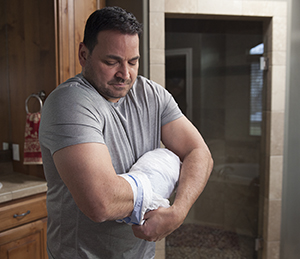
Bathe as directed by your healthcare provider. When you bathe, keep your cast out of water and wrapped in plastic.
-
Don’t soak your cast in water, even if it’s wrapped in plastic.
-
If your cast does get wet, try drying it as soon as possible. To do this, use a hair dryer set to cool. Call your provider if your cast doesn’t dry in 24 hours.
Handle with care
For the best results, remember the following:
Do
-
Do keep the cast clean and dry. Cover it with plastic to protect it when around dirt or water.
-
Do use any support you're given, such as crutches or a sling.
-
Do raise (elevate) the cast above your heart whenever possible. This will help with swelling.
Don’t
-
Don't slide anything inside the cast, even to scratch your skin.
-
Don't put lotions or powders around the cast or inside it.
-
Don't hit the cast.
-
Don't cut the cast or pull it apart.
-
Don't wash the cast.
When to call your healthcare provider
Call your healthcare provider right away or get medical care if you have any of these:
-
Swelling or cast tightness that doesn't get better when it's raised above heart level
-
Swelling that causes pain or makes it so you cannot move your fingers or toes
-
Your cast becomes loose or breaks
-
Your cast gets wet and can't be dried
-
You have more pain, numbness, or tingling in fingers or toes
-
Your fingers or toes become blue or cold



