Whether you’re recovering at home or in a rehabilitation facility, you need to protect your new hip. Sit and move the way you were taught in the hospital. Be sure to see your surgeon for scheduled follow-up visits, and return to activity slowly. A total hip replacement is major surgery, so don’t be surprised if it takes a few months before you feel really good.
See your surgeon
Post-op visits allow your surgeon to make sure your hip is healing well. Stitches or staples are often taken out about
Call 911
Call
-
Chest pain
-
Shortness of breath
-
Dizziness or confusion
When to call your healthcare provider
Call your surgeon or other healthcare provider right away if you have any of the following:
-
Hip pain gets worse
-
Pain or swelling in your calf or leg not related to your incision
-
Tenderness or redness in your calf
-
Fever of
100.4 °F (38 °C) or higher, or as directed by your healthcare provider -
Shaking chills
-
Swelling or redness at the incision site gets worse
-
Fluid draining from the incision
Returning to activity
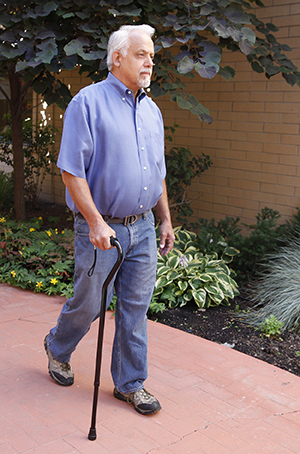
Practice walking daily. Try to do more each week. Start by getting your own glass of water. If the weather is good, walk to the corner to mail a letter. Keep at it—that’s the main thing.
Sitting and dressing
To protect your new hip, an occupational therapist or physical therapist will teach you safer ways of doing daily tasks. Use the following tips when sitting, dressing, or using stairs.
-
To sit, back up until the edge of the chair touches your leg. Then, using the armrests to support your weight, lower yourself into the seat. Always keep your operated leg out in front.
-
To pull on socks and shoes, use a long-handled device, such as a grasper or hook. Try this with slip-on shoes first.
-
To wash your feet and legs, use a long-handled sponge and a shower hose.
-
To use stairs, step up first with your good leg. Then bring your operated leg up to meet it. When going down, step down first with your operated leg.
Returning to sex
After the incision heals and you regain some hip movement, you may be ready to have sex. Ask your surgeon about when it is safe to start having sex, and what positions are safe.
Maintaining your new joint
An infection in your body could harm the new joint. Talk with your surgeon before scheduling medical or dental procedures. You may need to take antibiotics to prevent infection, even years after your surgery. To check joint stability over time, you may have X-rays every year or two.



