Dismiss Modal

Types

Understanding Shoulder Instability

Choose a preferred language

The shoulder is the most flexible joint in the body. It allows you to throw a ball, scratch your back, and reach in almost any direction. But if your shoulder joint is injured, it may become unstable. This is called shoulder instability.


A healthy, stable shoulder

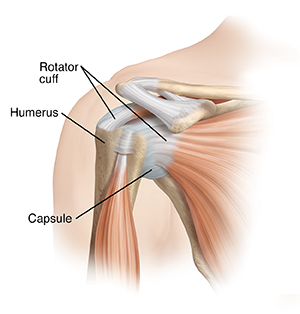
The head of the arm bone (humerus) rests in a socket (glenoid), much like a golf ball fits on a tee. Parts of the joint called stabilizers hold the humeral head and glenoid together. These include a sheet of ligaments and other tough fibers called the capsule. This encloses the humeral head and glenoid. 
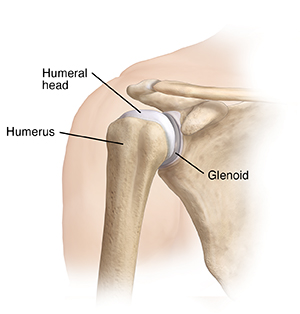
Front view of shoulder joint showing humerus, glenoid, and humeral head.Front view of shoulder joint showing rotator cuff, humerus, and capsule.


A loose, unstable shoulder

The leading cause of instability is an injury that forces the humeral head out of its socket. If the humerus pushes completely out of the socket, it’s called a dislocation. If it only pushes partially out, it’s called a subluxation. In both cases, the injury stretches or tears fibers in the capsule. It can also damage other parts of the joint. This makes the humeral head more likely to slip out of the glenoid again.


Making your shoulder stable again

Your health care provider will evaluate your shoulder. This will likely include imaging tests, such as X-rays and often an MRI. You’ll then discuss treatment choices. These can include physical therapy, surgery, or both. After the shoulder is stabilized, proper exercise can help keep it that way.


© 2000-2025 The StayWell Company, LLC. All rights reserved. This information is not intended as a substitute for professional medical care. Always follow your healthcare professional's instructions.

Make an Appointment

Make an Appointment

Find a Doctor

Find a Doctor

Find a Location

Find a Location

Related Services

Orthopedics Center

Related Articles
Read article
Orthopedics
Tailbone (Coccyx) Fracture

The tailbone, or coccyx, is at the bottom of your spine. It is possible to break (fracture) this bone when you fall and land in a seated position. This injury takes about 4 weeks to heal. Read on for details on caring for this injury at home.

Read article
Orthopedics
Thumb Dislocation

How to care for your thumb after you've had a dislocation.

Read article
Orthopedics
Elbow Sprain

A sprain is a tearing of the ligaments that hold a joint together. Moderate to severe sprains are treated with a sling or splint. Minor sprains can be treated without any special support.

Read article
Orthopedics
Understanding Carpal Tunnel Syndrome

Carpal tunnel syndrome leads to tingling and numbness of the hand and wrist. In time, the condition can make even simple tasks hard to do.