It’s not easy to change habits you've had for a lifetime. Experts say that it can take 6 months just to change one old habit for a healthier one. That’s why gradual change is so important. These tips are reminders of the dozens of small ways you can change your habits when eating out. Don’t expect to follow each tip all the time. Think of the tips as options for handling things that may have given you trouble in the past.
Fast food tips
-
Choose grilled chicken sandwiches and plain hamburgers. Add vegetables to your burgers and sandwiches and go light on creamy sauces like mayonnaise and tartar sauce. Choose whole-grain buns or bread when available.
-
Remove the skin from fried chicken. Choose mashed potatoes, corn on the cob, or baked beans on the side.
-
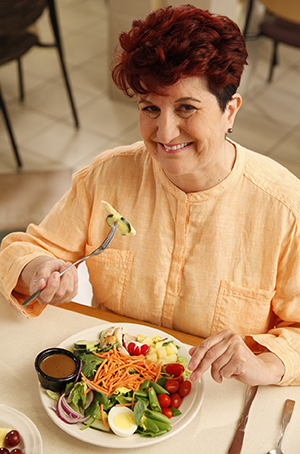
Order a broiled or grilled chicken salad and pile on fresh vegetables from the salad bar. Use a small amount of dressing.
-
Top a baked potato with cottage cheese and vegetables from the salad bar.
-
Ask for a pizza topped with vegetables.
-
Watch portion size. Order regular-sized meals, not super-sized. A kid's meal may be enough and may have healthier options for sides.
-
Stay away from milkshakes, sugary sodas, and sweetened drinks. Instead choose low-fat or skim milk, water, unsweetened iced tea, and sparkling water.
-
Many fast-food restaurants list the calorie content on the menu. Let this guide your choices.
Restaurant tips
-
Plan ahead. Decide what you will eat before you get to the restaurant. If you plan to indulge on rich foods, choose healthier foods during the rest of the day.
-
Don’t be afraid to ask how foods are prepared. Ask whether they can be done without high-fat ingredients, such as cream, butter, cheese, and oil.
-
Ask for sauces and salad dressings on the side and use just a tablespoon. Ask for low-fat dressings or vinaigrettes.
-
Try starting your meal with a bowl of vegetable soup or a salad. This may help to prevent you from overeating during the meal.
-
Order meat, poultry, and fish broiled, grilled, baked, poached, or steamed. Always remove the skin from chicken.
-
Choose Mexican dishes made with soft tortillas rather than crispy, fried tortillas. For toppings, use salsa and lettuce rather than sour cream and cheese.
-
For dessert, enjoy fruit, sorbet, or frozen yogurt. Share a rich dessert with friends.
-
Make a meal out of an appetizer (such as shrimp cocktail or fresh pasta), bread, and salad as your main meal. Ask for an appetizer-sized portion of an entrée.
-
Don't arrive starving. Make sure you have eaten throughout the day before dining out so you don't overindulge.
-
Chain restaurants may include calorie counts on the menu.
-
You can ask other restaurants for a list of ingredients or the calorie count for a specific dish on the menu that you are interested in ordering.



