Fiber is found in plant foods, such as fruits, vegetables, legumes, nuts, seeds, and grains. Fiber passes through your body undigested. A high-fiber diet helps food move through your intestinal tract. The added bulk can help prevent constipation. In people with small pouches in the colon (diverticulosis), fiber helps clean out the pouches along the colon wall. It also prevents new pouches from forming. A high-fiber diet reduces the risk for colon cancer. It also lowers blood cholesterol and prevents high blood sugar in people with diabetes.
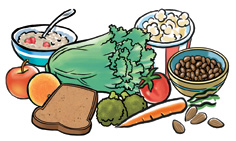
Include the high-fiber foods listed below as part of your diet. If you are not used to eating high-fiber foods, start with 1 or 2 foods from this list. Every 3 to 4 days, add a new food to your diet. Do this until you are eating 4 high-fiber foods per day. This should give you 20 to 35 grams of fiber a day. You need to drink a lot of water when you are on this diet to prevent constipation. Aim for at least 6 to 8 glasses of water a day. Water makes the fiber swell and increases its benefit.
Foods high in fiber
These foods are high in fiber:
-
Breads. Breads made with 100% whole-wheat flour or whole grains; wheat or rye crackers; whole-grain or corn tortillas; bran muffins
-
Cereals. Whole-grain and bran cereals (shredded wheat, wheat flakes, raisin bran, corn bran); oatmeal; granola
-
Fruits. Fresh fruits and their edible skins (pears, prunes, raisins, berries, apples, and apricots); bananas, citrus fruits, mangoes, pineapple; prune juice
-
Nuts and seeds. Any nuts and seeds, such as walnuts, peanuts, pecans, pistachios, almonds, and chia; flax and pumpkin seeds
-
Vegetables. This includes all vegetables, which are best served raw or lightly cooked; those higher in fiber include green peas, celery, eggplant, potatoes, spinach, broccoli, Brussels sprouts, winter squash, carrots, cauliflower, soybeans, lentils, and fresh and dried beans of all kinds
-
Whole grains. Oats, brown rice, quinoa, barley, sorghum, spelt, rye, farro, popcorn, and wheat; corn and graham flours
If you have diverticulosis
There aren't any specific foods to stay away from if you have diverticulosis. But each person is different. There may be some foods that make your symptoms worse. Keep track and don’t eat foods that make you feel worse.



