An electroencephalogram (EEG) is a test to find problems in the electrical activity of the brain. Brain cells (neurons) communicate by making electrical signals. These signals are measured by the EEG. Any signals that aren't normal can be found.
This test is safe and painless. You will sit in a reclining chair or lie down on an exam table in a room. The technologist will measure certain points on your head. They may use a special pencil to mark the spots where sticky pads called electrodes will be placed on your scalp. Your scalp may be rubbed with a mildly abrasive cream. Then 15 to 30 electrodes will be attached to your scalp with tape or an adhesive.
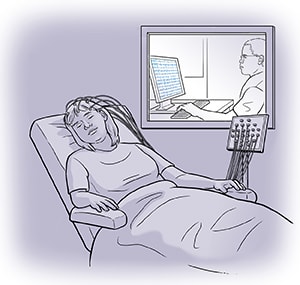
Getting ready for the test
Don't eat or drink anything with caffeine for 8 hours before the test. You may also be told to not take certain prescription medicines that affect the nervous system.
Most tests are done as an outpatient and may take up to 1 hour. Some tests are looking for seizure activity. For this kind of test, you may need to stay overnight at the hospital. You will then stay connected to the EEG machine for a longer period of time.
During the test
While you are having the test:
- Try to relax and stay still.
- Don't talk.
You may be told to:
- Open and close your eyes when asked to.
- Breathe quickly and deeply (hyperventilate) for a few minutes.
- Sense a flashing light through your closed eyes.
- Relax and go to sleep.
- Respond to questions.
After your test
When the test is done, all of the electrodes will be removed. At home, wash your hair to remove any remaining glue, gel, or paste. You can get right back to your normal routine. Your doctor will let you know when your test results are ready.
Online Medical Reviewer: Anne Fetterman RN BSN
Online Medical Reviewer: Joseph Campellone MD
Online Medical Reviewer: Raymond Kent Turley BSN MSN RN
Date Last Reviewed: 09/01/2025
© 2000-2026 The StayWell Company, LLC. All rights reserved. This information is not intended as a substitute for professional medical care. Always follow your healthcare professional's instructions.


