Take care of your back throughout the day. You will likely have fewer back problems if you do. Try to warm up before you move. Shift positions often. Also do your best to form healthy habits.
Warm up for the day
Do a few slow, catlike stretches before starting your day. This simple warmup can soften your disks, stretch your back muscles, and help prevent injuries.
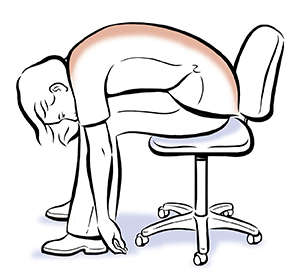
Shift positions often
At work and at home, change positions often. This helps keep your body from getting stiff. Stand up or lean back while you sit. If you can, get up and move every
Form healthy habits
Here are some suggestions:
-
Keep a healthy weight. When you are overweight, your back is under excess strain. But losing just a few extra pounds can help a lot.
-
Try not to overeat. Learn about serving sizes. The size of a serving depends on the food and the food group. Many foods list serving sizes on the labels.
-
Handle minor aches with cold and heat. Apply cold the first
24 to 48 hours. Use heat after that. Always place a thin cloth between your skin and the source of cold or heat. -
Take medicines as directed. This helps keep pain under control. Always read labels. Call your healthcare provider or pharmacist if you have any questions.
Walk each day
A daily walk keeps your back and thigh muscles stretched and strong. This gives your back better support. Be sure to walk with your spine’s 3 curves aligned, by keeping your head, hips, and toes connected by a vertical line.
Online Medical Reviewer: Berry, Judith, PhD, APRN
Online Medical Reviewer: Joseph, Thomas N., MD
© 2000-2026 The StayWell Company, LLC. All rights reserved. This information is not intended as a substitute for professional medical care. Always follow your healthcare professional's instructions.


