What are the effects of stroke?
The effects of stroke vary from person to person. They are based on the type, severity, location, and number of strokes the person has. The brain is very complex. Each part of the brain has a certain function or ability. When an area of the brain is damaged from a stroke, the part of the body it controls may lose normal function. This may result in a disability. Large strokes can cause death. Smaller strokes in certain parts of the brain can also cause death.
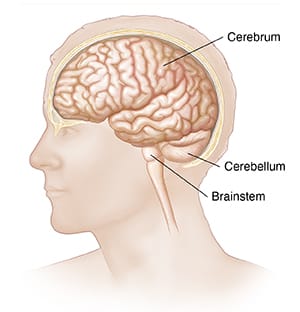
The effects of a stroke depend on where it occurs. The brain has three main areas:
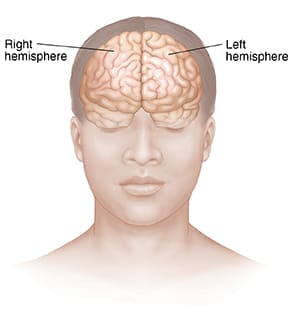
- Cerebrum. This is the name for the right and left sides of the brain. The sides are also called hemispheres.
- Cerebellum. This is the back of the brain.
- Brainstem. This is the base of the brain.
What effects may happen from a stroke in the cerebrum?
The cerebrum controls:
- Movement.
- Feeling or sensation.
- Speech.
- Thinking.
- Reasoning.
- Memory.
- Vision.
- Emotions.
The cerebrum is divided into the right and left sides. The sides are called hemispheres. For most feeling and movement, one side of the cerebrum controls the opposite side of the body. For example, the right side of the cerebrum controls some functions on the left side of the body. Depending on the area and side of the cerebrum affected by the stroke, functions that may be impaired include:
- Movement and feeling or sensation.
- Speech and language.
- Chewing and swallowing.
- Vision.
- Cognitive ability, such as thinking, reasoning, judgment, and memory.
- Awareness of surroundings.
- Self-care ability.
- Bowel and bladder control.
- Emotional control.
- Sexual ability.
In addition to these effects, a more specific change may occur if a certain part of the cerebrum is damaged.
Effects of a right-hemisphere cerebrum stroke
The effects of a right-hemisphere stroke may include:
- Left-sided weakness or paralysis and sensory loss.
- Left-sided neglect or lack of awareness of the left side of the body.
- Vision problems, including loss of the left field of vision in both eyes.
- Problems with depth perception or directions, such as up or down and front or back.
- Not being able to locate or recognize body parts.
- Not being able to understand maps or to find objects, such as clothing or personal items.
- Memory problems.
- Behavior changes, such as lack of concern, impulsivity, and inappropriate words or actions.
- Depression.
Effects of a left-hemisphere cerebrum stroke
The effects of a left-hemisphere stroke may include:
- Right-sided weakness or paralysis and sensory loss.
- Right-sided neglect or lack of awareness of the right side of the body.
- Problems with speech and understanding language (aphasia).
- Vision problems, including the loss of the right field of vision in both eyes.
- Not as able to do math, or to organize, reason, or analyze.
- Behavior changes, such as being cautious and hesitant.
- Impaired ability to read, write, and learn new information.
- Memory problems.
- Depression.
What effects may happen from a stroke in the cerebellum?
The cerebellum is beneath and behind the cerebrum. It is at the back of the brain. It gets sensory information from the body through the spinal cord. It helps manage muscle action and control. It controls fine movement, coordination, and balance.
Strokes are less common in the cerebellum area. But the effects can be severe. The common effects of strokes in the cerebellum include:
- Being unable to walk.
- Trouble with coordination and balance (ataxia).
- Dizziness.
- Headache.
- Nausea and vomiting.
What effects may happen from a stroke in the brainstem?
The brainstem is at the base of the brain. It's right above the spinal cord. Many of the body's vital "life-support" functions are controlled by the brainstem. These include heartbeat, blood pressure, and breathing. It also helps control the main nerves for eye movement, hearing, speech, chewing, and swallowing. Some common effects of a stroke in the brainstem include:
- Breathing and heart function problems.
- Trouble with body temperature control.
- Balance and coordination problems.
- Weakness or paralysis.
- Trouble chewing, swallowing, and speaking.
- Vision changes.
- Coma.
- Death.
Date Last Reviewed: 09/01/2025
© 2000-2026 The StayWell Company, LLC. All rights reserved. This information is not intended as a substitute for professional medical care. Always follow your healthcare professional's instructions.


