An epidermoid cyst is the growth of normal tissue in an abnormal place in the body. It contains skin and nail tissue. An epidermoid cyst is also called an epidermoid tumor. The cyst is benign, meaning it is not cancer. But in rare cases, an epidermoid cyst may turn into skin cancer.
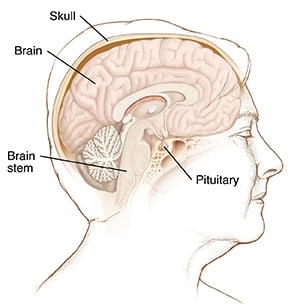
An epidermoid cyst grows very slowly. A brain or spinal cord cyst usually first appears when a person is an adult. It's most often found in one of these places:
- An area where the brain meets the brain stem
- On the pituitary gland
- Along the inside of the skull
- Growing through the skull bone
What causes an epidermoid cyst?
The cyst forms in the brain or spinal cord when a few cells that normally grow elsewhere are trapped in the brain or spinal cord during development. They can also occur after trauma or surgery if skin cells get trapped in the nervous system. They are often skin cells that are normally part of the skin of the face.
Symptoms of an epidermoid cyst
The symptoms depend on where the cyst is. You may have symptoms such as:
- Seizures.
- Headaches.
- Facial pain.
- Hearing loss.
- Numbness or weakness.
- Back pain.
- Balance problems.
- Stiff neck.
Diagnosing an epidermoid cyst
Your doctor will ask about your health history and symptoms. They will give you a physical exam. This may include a nervous system exam. Imaging tests may be done to look at your brain and spinal cord. The tests may include:
- CT scan. This is a test that uses a series of X-rays and a computer to create images of the inside of the body.
- MRI. This test uses large magnets and a computer to create images of the body.
Treatment for an epidermoid cyst
An epidermoid cyst in the brain or spinal cord is usually treated with surgery. If the cyst is not completely removed during surgery, it will likely grow back. Regrowth of an epidermoid cyst is usually very slow. It may take years before symptoms return.
If an epidermoid cyst has turned into skin cancer, you may need surgery and radiation treatment.
When to contact your doctor
Call your doctor right away if you have any of the following:
- Headache that doesn't go away
- Fever
- Confusion or are unable to stay awake
- Seizures
- Facial pain
- Back pain
- Stiff neck
Online Medical Reviewer: Anne Fetterman RN BSN
Online Medical Reviewer: Luc Jasmin MD
Online Medical Reviewer: Raymond Kent Turley BSN MSN RN
Date Last Reviewed: 11/01/2022
© 2000-2026 The StayWell Company, LLC. All rights reserved. This information is not intended as a substitute for professional medical care. Always follow your healthcare professional's instructions.


