Dismiss Modal

Types

Tension Headaches

Choose a preferred language

Tension headaches cause a dull, steady pain on both sides of the head. You also feel the pain in the neck and the back of the head. Your eyes may also feel tired. Tension headaches can be triggered by many things. These include:

  • Muscle tension and clenching

  • Lack of sleep

  • Bad posture

  • Eyestrain

  • Stress

  • Depression

  • Anxiety

  • Arthritis of the neck

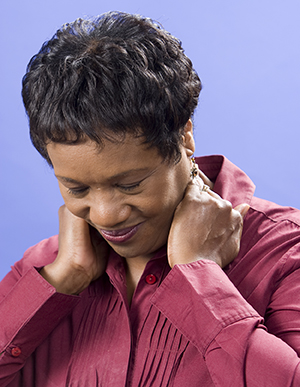
Woman massaging back of neck.


To help prevent tension headaches

Take these steps:

  • Make sure your work area is set up to help you prevent neck strain and eyestrain.

  • Make sure that your eyeglass prescription is current and is correct for the work you do.

  • Learn ways to relax and reduce emotional stress. These include deep breathing, progressive relaxation, yoga, meditation, and biofeedback.

  • Keep up a regular exercise program. Work with your healthcare provider on this. Exercise can help keep your neck and back flexible, strong, and relaxed.


To relieve the pain

Take these steps:

  • Use moist heat to relax the muscles. Soak in a hot bath or wrap a warm, moist towel around your neck.

  • Brush your scalp lightly with a soft hairbrush.

  • Give yourself a massage. Knead the muscles that go from your shoulders up the back of your skull.

  • Use an ice pack. Wrap the ice pack in a thin cloth or towel and apply it directly to the place where you feel pain.

  • Rest. Sleep often helps ease headache pain.

  • Drink plenty of fluids. Dehydration is a trigger for headaches. Don't drink alcohol. This will make dehydration worse.

  • Use pain medicine when needed for moderate to severe pain. Don't use the pain medicine more than twice a week. This helps prevent overuse headaches caused by medicine overuse.


© 2000-2025 The StayWell Company, LLC. All rights reserved. This information is not intended as a substitute for professional medical care. Always follow your healthcare professional's instructions.

Make an Appointment

Make an Appointment

Find a Doctor

Find a Doctor

Find a Location

Find a Location

Related Services

Stroke & Neuroscience Center

Related Articles
Read article
Brain Health
Arachnoid Cyst

An arachnoid cyst is a fluid-filled sac of the brain or spinal cord. It forms between the brain or spinal cord and the arachnoid membrane. An arachnoid cyst contains cerebrospinal fluid (CSF). These cysts appear most often in children, but they may also occur in adults.

Read article
Brain Health
Dermoid Cyst of the Brain or Spinal Cord

A dermoid cyst is the growth of normal tissue in an abnormal place in the body. The cyst is benign (not cancer). It contains different types of tissue, such as hair follicles, cartilage, sweat glands, and glands that make skin oils. A dermoid cyst in the brain or spinal cord is a rare type of dermoid cyst. They often appear in children under age 10, but can also appear in older children and young adults.

Read article
Brain Health
Cervical disk problems

The spine has three natural curves. The cervical curve is located in the neck. It forms the top part of the spine. For this reason, it is also called the cervical spine. This sheet tells you more about the parts of the cervical spine and damaged disks. This is a common problem that can affect the cervical spine, but most people don't need surgery for this.

Read article
Brain Health
Migraine Headache

A migraine is a type of headache that's often severe. Learn about migraines, including symptoms, triggers, and how to care for yourself at home.