Dismiss Modal

Types

Viral Meningitis in Children

Choose a preferred language

Meningitis is an infection or inflammation of the membrane and fluid around the brain and spinal cord. Viral meningitis is caused by a virus. It may start as another illness, such as the stomach flu. It most often happens in children younger than  5 years of age. It's not the same as bacterial meningitis, which is a serious illness caused by bacteria. Bacterial meningitis needs to be treated with antibiotics right away. Viral meningitis is often mild and less serious, except in infants younger than 3 months and with certain viruses such as herpes simplex. It will go away with no treatment.
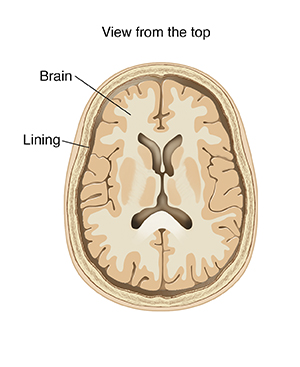
Top view cross section of brain showing lining.


Symptoms of meningitis

Viral meningitis isn't an emergency. But the symptoms are often the same as bacterial meningitis, which is a more serious condition. You won’t know which one your child has, so it's important to get medical care right away if your child has any of these symptoms:

  • Fever over 100.4°F ( 38.0°C) (in a baby less than 2 months of age)

  • Severe headache that doesn’t go away

  • Stiff neck (arching back or neck in infants)

  • Upset stomach (nausea) or vomiting with headache

  • Sleepiness and trouble waking up

  • Grouchiness and dislike of being handled

  • Bruise-like rash or splotchy skin

  • Sensitivity to light

  • No appetite

Note: If a newborn or infant is grouchy, very sleepy, or eats poorly, have them checked by a healthcare provider right away. Have them checked even if there's no fever.


Diagnosing meningitis

Tests are done to diagnose meningitis. The tests can show if it's bacterial or viral. The tests include:

  • Spinal tap. A sample of spinal fluid is taken from the spinal canal located in the lower back. It's checked for signs of bacteria or viruses. This is the main test for meningitis.

  • Imaging tests. These may include an MRI or a CT scan. These tests look for areas of swelling and inflammation.


Treating viral meningitis

Viral meningitis often goes away on its own in about 10 days. Medicines may be used to treat the symptoms linked to viral meningitis, such as headache or pain medicines, anti-nausea medicines, or IV (intravenous) fluids. These are to help keep your child more comfortable. Depending on the cause of your child's viral meningitis, the healthcare provider may prescribe certain antiviral medicines. When your child has recovered, follow-up care with the healthcare provider is important to check for problems with vision, hearing, movement, and mental function.

Featured in

© 2000-2026 The StayWell Company, LLC. All rights reserved. This information is not intended as a substitute for professional medical care. Always follow your healthcare professional's instructions.



Make an Appointment

Make an Appointment

Find a Doctor

Find a Doctor

Find a Location

Find a Location

Related Services

Stroke & Neuroscience Center

Related Articles
Read article
Brain Health
Spinal Muscular Atrophy in Children

Spinal muscular atrophy (SMA) is a disease of the nerves and muscles caused by certain genes. It causes muscle wasting and weakness.

Read article
Brain Health
When Your Child Has Brachial Plexus Palsy

The brachial plexus is a network of nerves in the neck and shoulder. These nerves carry signals that tell the arm and hand to move. If the brachial plexus is injured, palsy (paralysis) of the arm on that side may result. This condition is not painful and is usually very treatable.

Read article
Brain Health
Brain Abscess in Children

An abscess is a pocket of infection. In the brain, an abscess may be in one or more areas. This condition may cause problems with how the brain and spinal cord function. It is a serious and life-threatening condition that needs to be treated right away.

Read article
Brain Health
Head Injury in Children

A head injury can be as mild as a bump, bruise (contusion), or cut on the head. Or it can be a concussion, a deep cut or open wound, broken skull bones, internal bleeding, or damage to the brain. Head injuries are one of the most common causes of disability and death in children.
