Peripheral neuropathy is a disease of the nerves. It most often starts in your feet. It may eventually affect the arms. It can affect sensory nerves, motor (movement) nerves, or both.
It may cause pain or make you unable to sense pain. It may cause weakness. Lack of pain or loss of strength can make you more likely to hurt yourself without knowing it. But you can learn ways to protect your feet from injury. Some types of neuropathy get worse very quickly and can be life-threatening.
Nerves that control blood pressure, sweating, and heart rate are called autonomic nerves. Neuropathy can also affect these nerves. This can cause serious disability.
When nerves are diseased
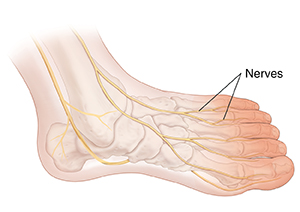
Nerves in your feet carry signals to your brain. Your brain reads those signals and interprets them as sensations. When nerves in your feet are diseased, signals may be disrupted or changed. The result may be a lack of feeling (numbness) in your feet. Or you may have other symptoms, such as tingling or pain.
Symptoms mask pain
Symptoms of peripheral neuropathy usually start in your toes. The symptoms may spread up your feet and legs as more of the nerve is affected. Symptoms such as numbness may decrease feeling in your feet or mask pain. Without pain, you may not notice a cut or even a bone fracture. Cuts may become infected. Fractures may heal poorly. This can lead to foot deformity.
Common causes of peripheral neuropathy
Some common causes of peripheral neuropathy include:
-
Diabetes or other endocrine disorders
-
Toxins such as alcohol
-
Not enough vitamin B-12
-
Kidney disease
-
Injury
-
Repetitive stress such as carpal tunnel syndrome
-
Autoimmune disease
-
Cancer and tumors
-
Chemotherapy cancer treatment
-
Hereditary disorders
-
Nervous system disorders
-
Infection
Diagnosis
Blood tests and imaging tests often help find the cause. Special nerve tests are often helpful. These include nerve conduction velocity studies (NCV) and electromyography (EMG). NCV looks to see how well signals move along nerves. EMG helps tell if symptoms are caused by muscle or nerve disorders. You may have genetic tests if your healthcare provider thinks you have a type of neuropathy that runs in families.
Treatment
Your healthcare provider will talk with you to decide on a treatment plan. Treatment can include:
-
Medicines
-
Injections
-
TENS (transcutaneous electrical nerve stimulation)
-
Acupuncture
-
Massage
Online Medical Reviewer: Raymond Turley Jr PA-C
Online Medical Reviewer: Shaziya Allarakha MD
Date Last Reviewed: 08/01/2022
© 2000-2026 The StayWell Company, LLC. All rights reserved. This information is not intended as a substitute for professional medical care. Always follow your healthcare professional's instructions.


