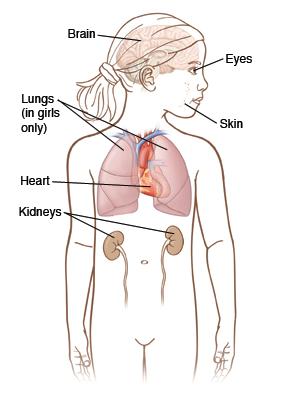
Tuberous sclerosis complex (TSC) is a condition that causes growths around the body. Nerve cells develop abnormal growths called hamartomas. The most common places for hamartomas include the brain, eyes, heart, lungs, kidneys, and skin. Hamartomas are not cancer (benign). But depending on where they grow, they may cause problems. These can include seizures, skin problems, and learning disabilities. Your child’s doctor can tell you more about TSC and the treatment choices for your child.
What are the causes of TSC?
TSC is caused by a change (mutation) in certain genes that affect nerve growth. This change often happens by chance. It can also be passed down in families. If a diagnosis is confirmed, parents and siblings should be checked for the condition as well.
What are the symptoms of TSC?
Children with TSC often have:
-
Cognitive, learning, and developmental problems.
-
Autism and autistic behaviors.
-
Hyperactivity.
-
Self-injuring behaviors.
Other symptoms for TSC vary depending on where the hamartomas grow:
-
Eye hamartomas can cause vision problems.
-
Heart hamartomas can cause irregular heartbeat.
-
Kidney hamartomas can cause abnormal cell development. This can lead to high blood pressure or decreased kidney function.
-
Lung hamartomas happen only in girls and can cause breathing problems.
Brain hamartomas can cause:
-
Seizures.
-
Developmental delay (problems with learning, reasoning, or behavior).
Skin hamartomas can cause:
-
Light spots (hypopigmentation).
-
Thickened skin that feels like an orange peel.
-
Acne-like spots on the face.
-
Small, fleshy tumors around the toenails or fingernails.
How is TSC diagnosed?
Your child will likely see a pediatric neurologist for diagnosis and treatment. This is a doctor who treats nervous system problems. The doctor will ask about your child’s health history. This is to learn more about your child’s symptoms, other health problems, and family health history. Your child may also have tests, such as:
-
Nervous system exam. This is to check how well your child’s nervous system is working. During the exam, the doctor checks your child’s muscle strength, balance, coordination, and reflexes. They will also check skills, such as vision, memory, and hearing. In addition, the doctor checks for hamartomas on the skin.
-
Skin exam. This is to look for TSC growths.
-
Eye exam. This is to look for TSC growths.
-
Imaging test. This may be an MRI or CT scan. These scans show detailed pictures of the brain. The doctor can check for areas of abnormal cells or tumors. Ultrasound imaging is also helpful in finding and watching lesions in the heart, liver, and kidneys.
-
Genetic tests. These are to check for the mutation.
How is TSC treated?
Treatment for TSC varies depending on your child’s needs. Treatment may include:
-
Regular checkups. Visits to the doctor to check your child’s health and to do routine testing. For instance, if your child has hamartomas in the heart, your child may need tests to check for problems, such as an irregular heartbeat.
-
Special education. This can help children manage symptoms of developmental delay.
-
Supportive care. This may include speech, physical, or occupational therapy.
-
Medicines. These can control problems, such as seizures.
-
Surgery. This may be done to remove tumors or skin lesions.
What are the long-term concerns?
TSC is a lifelong condition that needs to be managed. The outcome for your child depends on the severity of their condition. Some children can be as active and independent as other children. Others may need more treatment and supportive care. The kidneys, lungs, and brain may have long-term complications. There is also some risk for the growth of cancer. Hamartomas need to be watched for possible change into cancer (malignant) tumors. Work closely with your child's care team to learn the best ways to help your child. In an age-appropriate way, teach your child about TSC. Include your child as much as possible in health care decisions that impact them.
Note
A positive outlook helps while supporting your child. Encourage your child to be active and to try new things. Consider counseling, which can help you and your child deal with any worries or concerns. And get help from your friends, community, and support groups. The more you learn about your child’s condition and its treatments, the more in control you may feel. For more information about tuberous sclerosis, contact the Tuberous Sclerosis Alliance at www.tsalliance.org .
Online Medical Reviewer: Joseph Campellone MD
Online Medical Reviewer: Marianne Fraser MSN RN
Online Medical Reviewer: Raymond Kent Turley BSN MSN RN
Date Last Reviewed: 06/01/2025
© 2000-2026 The StayWell Company, LLC. All rights reserved. This information is not intended as a substitute for professional medical care. Always follow your healthcare professional's instructions.


