One or more lumps were found in your breasts. These are likely fibrocystic breast changes.
With this condition, fibrous tissue and small cysts form in your breasts. They may increase and decrease in size with your menstrual cycle. Symptoms can include breast lumps that you can see and feel. You may also have breast pain, swelling, and tenderness.
The lumps linked with fibrocystic breast changes are not cancer, and don't lead to cancer. They are very common and affect most women at some point in their lives.
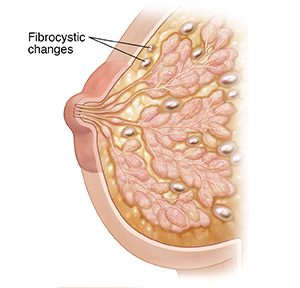
Treatment for fibrocystic breast changes is rarely needed. Home care to relieve symptoms may be recommended, though.
If confirmation of the diagnosis is desired or needed, further evaluation may be done. This can include:
-
Another exam by your doctor or a gynecologist.
-
Imaging tests, such as a mammogram or ultrasound.
-
Biopsy (procedure to remove small tissue samples from the breast lumps).
You’ll be told more about these tests, if needed.
Home care
-
If you are having breast pain:
-
Take an over-the-counter pain reliever, if directed to by your doctor.
-
Wear a well-fitted bra or sports bra for extra support. If you have breast pain at night, try wearing the bra during sleep.
-
Apply a warm compress (towel soaked in warm water) to the breast. You may also use a hot water bottle.
-
-
Check your breasts each day. Keep a log of whether the lump seems to be changing in size or tenderness with your period. This can help your doctor learn more about your breast condition.
-
Ask your doctor about lifestyle or diet changes or alternative treatments you can try to help treat this condition.
Follow-up care
Follow up with your doctor as directed. You may be advised to schedule another appointment for a breast exam with your doctor or a gynecologist about 7 to 10 days after the start of your next period. If fibrocystic breast changes cause symptoms that bother you, tell your doctor. They may recommend other treatments.
When to get medical advice
Contact your doctor right away if you have:
-
A fever of 100.4°F (38°C) or higher, or as directed by your doctor.
-
Redness or swelling of the breasts.
-
Discharge from the nipples.
-
Visible changes in the skin over the nipples or breasts.
-
Lumps grow larger, feel very hard, or have an irregular shape.
-
New lumps form that look or feel different from current lumps.
Featured in
Online Medical Reviewer: Heather Trevino
Online Medical Reviewer: Irina Burd MD PhD
Online Medical Reviewer: Paula Goode RN BSN MSN
Date Last Reviewed: 07/01/2025
© 2000-2026 The StayWell Company, LLC. All rights reserved. This information is not intended as a substitute for professional medical care. Always follow your healthcare professional's instructions.


