Servings and portions. What’s the difference? These terms can be very confusing. But learning to measure serving sizes can help you figure out how many carbohydrates (carbs) and other foods you eat each day. They're also powerful tools for managing your weight.
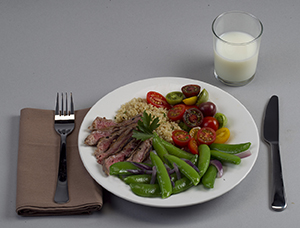
Servings and portions
Many different words are used to describe amounts of food. If your healthcare provider uses a term you’re not sure of, don’t be afraid to ask. It helps to know the difference between servings and portions:
-
A serving size. This is a fixed size. Food producers use this term to describe their products. For instance, the label on a cereal box could say that 1 cup of dry cereal = 1 serving.
-
A portion (also called a helping). This is how much you eat or how much you put on your plate at a meal. For instance, you might eat 2 cups of cereal at breakfast.
Watching serving sizes
The portion you choose to eat (such as 2 cups of cereal) may be more than 1 serving as listed on the food label (such as 1 cup of cereal). That’s why it helps to measure or weigh the food you eat. Because the food label values are based on servings, you’ll need to know how many servings you eat at 1 sitting.
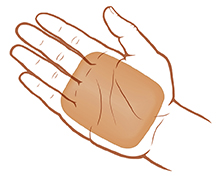
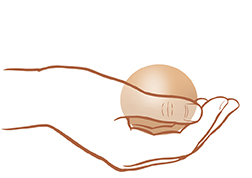
When you’re planning for a snack or a meal, keep servings in mind. It's OK if you don’t have measuring cups or a scale handy. There are other ways to figure out serving sizes. For instance, you can compare the food to the size of your hand (see pictures below). Here are some general tips:
-
About 3 ounces of meat fits in the palm of your hand
-
1 cup of food is about the size of your fist
-
An open hand holds about 1 to 2 ounces of nuts

Managing portion sizes
If your weight is a concern, reducing your portions can help. A portion is the amount of each type of food on your plate. You can eat more than 1 serving of a food at once. But to keep from eating too much at 1 meal, learn how to manage your portions. Portion control will also help with blood sugar management.
Online Medical Reviewer: Callie Tayrien RN MSN
Online Medical Reviewer: Raymond Kent Turley BSN MSN RN
Online Medical Reviewer: Robert Hurd MD
Date Last Reviewed: 04/01/2024
© 2000-2026 The StayWell Company, LLC. All rights reserved. This information is not intended as a substitute for professional medical care. Always follow your healthcare professional's instructions.


