Fitness has a special role for people with diabetes. Being fit means getting healthier by adding activity to your day. Talk with your healthcare provider before getting started. They may want you to have a checkup before you are more active. Also, your provider may want you to have some tests first. This helps you and your provider learn how you will respond to a fitness program. Ask your provider if they know of good programs that can monitor your response to the fitness program, at least for the first few weeks.
Your checkup
A checkup helps ensure that your fitness plan will bring you the most benefit. It also lowers the risks that may come with physical activity. As part of your checkup:
-
You may have a test called a hemoglobin A1C. The HbA1c or A1C test measures your average sugar (glucose) level over 2 to 3 months. A1C is often given as a percentage. But it is now also given as a number that shows your estimated Average Glucose (eAG). The eAG gives you a number that is like the numbers listed on your daily glucose monitor.
-
Your healthcare provider may check your heart with a resting electrocardiogram (ECG). Diabetes can cause heart problems. But a fitness program can help these problems get better. Being fit can also help improve your cholesterol and blood pressure levels.
-
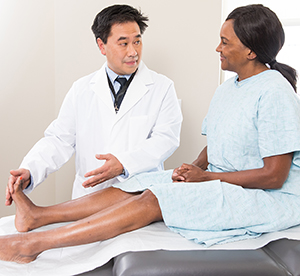
Your healthcare provider may check your feet. People with diabetes can have problems with their feet. Your provider can check your feet before you become more active. Take time to find shoes that will support your feet well while you exercise. Wear socks that fit well. Wear socks that pull moisture away from your skin.
If you have an exercise stress test
An exercise stress test can show how your heart responds to activity. It can show what level of exercise is right for you. You will have small electrodes placed on your chest. You will then walk on a treadmill or ride an exercise bike. Your heart rate is checked. You may also be asked about any discomfort or pain you may feel while you exercise during this test. If you have this test, your provider will give you more details.
Online Medical Reviewer: Heather M Trevino BSN RNC
Online Medical Reviewer: Marianne Fraser MSN RN
Online Medical Reviewer: Shaziya Allarakha MD
Date Last Reviewed: 04/01/2024
© 2000-2026 The StayWell Company, LLC. All rights reserved. This information is not intended as a substitute for professional medical care. Always follow your healthcare professional's instructions.


