Diabetes makes your body less able to use the foods you eat for energy. This causes sugar (glucose) to build up in the blood. Over time, having too much glucose in your blood can harm the blood vessels in your kidneys. This leads to kidney disease.
But by managing your diabetes, you can keep a healthy blood sugar level. This can slow or prevent kidney damage. And it will help diabetes medicines that act in the kidneys to work well.
Keeping your blood sugar in target range
The best way to keep your blood sugar at a healthy level is to:
-
Follow your diabetes meal plan.
-
Exercise regularly.
-
Take your medicine as directed.
-
Test your blood sugar as often as directed.
Talk with your healthcare provider if your blood sugar is often under
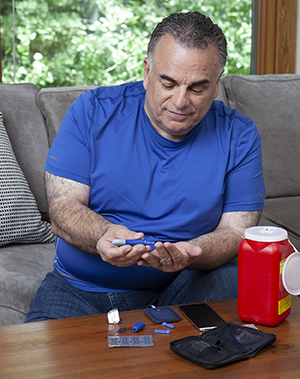
Testing your blood sugar
-
Wash your hands with soap and clean, running water. Dry them well.
-
Follow the directions for placing a test strip in the meter.
-
Prick the side of your finger with a small needle (lancet). Squeeze your finger gently until you get enough blood. If you can't get enough blood, hold your hand down at your side and gently shake it.
-
Place a drop of blood on the test trip according to your meter’s instructions.
-
Read and record your results.
If you have low blood sugar
If your blood sugar is too low, you may get a headache or feel hungry, weak, shaky, dizzy, sweaty, or nervous. Check your blood sugar. If it's too low:
-
Eat fast-acting sugar, such as
6 hard candies,1/2 cup juice, or3 to4 glucose tablets. -
Test your blood sugar again in 15 minutes.
-
If your blood sugar is still too low, eat another dose of fast-acting sugar. Get medical care if you aren’t better after that.
-
Have a healthy snack once your blood sugar is back in the normal range.
If you have high blood sugar
If your blood sugar is too high, you may feel thirsty, weak, dizzy, or nauseated. You may have blurry vision or need to pee often. Check your blood sugar. If it's too high:
-
Drink a sugar-free liquid, such as water or diet soda.
-
Take extra insulin or medicine if your provider has told you to do so.
-
Call your provider if you're not feeling better in 1 hour.
Online Medical Reviewer: Chris Southard RN
Online Medical Reviewer: Rajadurai Samnishanth Researcher
Online Medical Reviewer: Rita Sather RN
Date Last Reviewed: 04/01/2024
© 2000-2026 The StayWell Company, LLC. All rights reserved. This information is not intended as a substitute for professional medical care. Always follow your healthcare professional's instructions.


