The stomach is a J-shaped organ in the upper belly (abdomen). It’s part of the digestive system. It’s between the end of the food pipe (esophagus) and the start of the first part of the small bowel (duodenum).
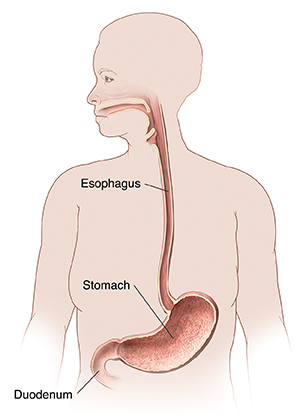
The stomach is much like a bag with a lining. The stomach is made of these five layers:
-
Mucosa. This is the first and innermost layer or lining. It contains the glands that release digestive juices. These are called hydrochloric acid and pepsin. This is where most stomach cancers start.
-
Submucosa. This second layer supports the mucosa. It is rich in blood vessels, lymphatic vessels, and nerves.
-
Muscularis. The third layer is made of thick muscles. They help to mix food with the digestive juices.
-
Subserosa. This layer contains supporting tissues for the serosa.
-
Serosa. This is the last and outermost layer. It’s the lining that wraps around the stomach to confine it.
After you chew and swallow food, it enters your stomach from the food pipe (esophagus). At this point, pepsin and hydrochloric acid are released. Your stomach muscles create a rippling motion, which combines the food with the digestive juices. After about 2 to 3 hours, partly digested food moves into the small intestine. This is where it’s broken down further, and over time, nutrients are absorbed into your body.
Date Last Reviewed: 06/01/2023
© 2026 The StayWell Company, LLC. All rights reserved. This information is not intended as a substitute for professional medical care. Always follow your healthcare provider's instructions.


