An upper gastrointestinal (GI) series is an X-ray exam of the esophagus, stomach, and duodenum. The duodenum is the start of your small intestine. This test uses a type of real-time X-ray (fluoroscopy) that can show organs in motion. This test helps your doctor find problems such as difficulty swallowing, ulcers, tumors, and certain diseases.
How do you get ready for an upper GI series?
-
Follow any directions you are given for not eating or drinking before your test.
-
Be sure to mention the medicines you take, and ask if it’s OK to take them before your test.
-
Don't smoke the morning of the test.
-
The test usually takes about 30 minutes. Allow extra time to check in.
What to tell the technologist
Tell the technologist if:
-
You have any allergies.
-
You ate or drank within the last 8 hours.
-
You’re pregnant or think you may be.
-
You’ve had any previous surgery.
-
You take any medicines.
What happens during an upper GI series?
-
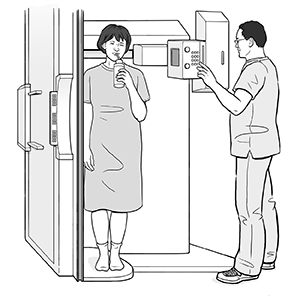
You will drink a liquid (barium) that improves X-ray images.
-
You also may swallow "fizzies." This is a substance that makes air build up in your stomach. Don’t burp, even if you feel you have to.
-
You may need to stand. You will also lie in different positions or have your exam table tilted in various directions.
-
You will be asked to hold your breath for a short time during the X-ray.
What happens after an upper GI series?
-
Your stool may appear white or lighter than normal for 2 to 3 days.
-
You may have constipation caused by the barium. You can relieve this by taking an over-the-counter laxative or stool softener and drinking lots of fluids for several days after the exam. Talk with your doctor if you have serious bowel movement problems after the test.
-
Your doctor will discuss the test results with you during a follow-up appointment or over the phone.
-
Your next appointment is:__________________
Online Medical Reviewer: Jessica Gotwals RN BSN MPH
Online Medical Reviewer: Neil Grossman MD
Online Medical Reviewer: Raymond Turley Jr PA-C
Date Last Reviewed: 05/01/2025
© 2000-2026 The StayWell Company, LLC. All rights reserved. This information is not intended as a substitute for professional medical care. Always follow your healthcare professional's instructions.


