GERD stands for gastroesophageal reflux disease. You may also hear it called acid indigestion or heartburn. It happens when food from the stomach flows back up (refluxes) into the tube that connects the mouth to the stomach (esophagus). Regurgitating or spitting up is common in babies. This is called gastroesophageal reflux or GER. In fact, more than half of babies have GER during their first 3 months. Babies with GER will often spit up after being fed. They may sometimes spit up when coughing or crying. They may also be fussy during or after feeding. Most babies grow out of GER when they are about 12 to 18 months old. When the reflux causes troublesome symptoms, such as poor weight gain or damage to the tissues in the throat or esophagus, it is called GERD.
Is GERD a problem for my baby?
If a baby is happy and gaining weight normally, the regurgitation is probably GER and is likely not causing harm. But certain symptoms can be signs of GERD, a more serious problem. Tell your healthcare provider if your baby has any of the following symptoms:
-
Blood, or green or yellow fluid in vomit
-
Poor weight gain or growth
-
Continues to refuse to eat
-
Trouble eating or swallowing
-
Breathing problems, such as wheezing, persistent cough, or trouble breathing
-
Waking up at night coughing or wheezing
How can I help my child feel better?
Your baby will likely outgrow GER. To help reduce GER and spitting up in the meantime, the following changes can help:
-
Feed your baby smaller meals more often.
-
Feed your baby in an upright position.
-
Burp your baby gently after each breast, or after
1 to 2 ounces of a bottle. -
Keep your baby in an upright position for
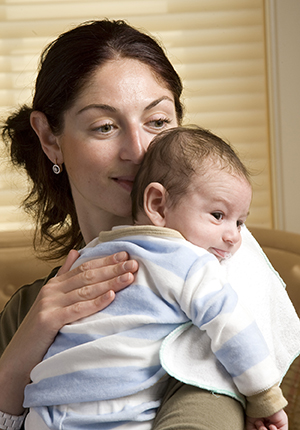
20 to 30 minutes after meals. Do this by carrying your baby in an upright position (for example, on your shoulder). Don't place your baby in a baby carrier or car seat. -
For bottle-fed babies, ask your healthcare provider about making the breast milk or formula thicker.
-
Don't use baby clothes with tight waistbands or tight-fitting diapers.
-
Keep tobacco smoke away from your baby.
It is not known if these measures can prevent GER from progressing to GERD, but they are helpful for both conditions. Also, remember to always place your baby on their back for sleep. There is a greater chance of SIDS (Sudden Infant Death Syndrome) if you place them on their belly to sleep.
When should my child see the healthcare provider?
If your child has more serious symptoms of GERD, your baby's healthcare provider or nurse will work with you to help relieve them. Your healthcare provider may suggest some changes in addition to the ones above. These may include trying a different formula. Medicines are sometimes prescribed. In certain cases, your baby may need tests to help be sure of the cause of the symptoms. Rarely surgery may be needed, particularly in severe cases of GERD.
Featured in



