Continuous positive air pressure (CPAP) uses gentle air pressure to hold the airway open. CPAP is often the most effective treatment for sleep apnea. It works very well as a treatment for adults diagnosed with obstructive sleep apnea with a lot of sleepiness. But keep in mind that it can take several adjustments before the setup is right for you.
How CPAP works
The CPAP machine is a small portable pump that sits beside the bed. The pump sends air through a hose. This is held over your nose alone, or nose and mouth by a mask. Mild air pressure is gently pushed through your airway. The air pressure nudges sagging tissues aside. This widens the airway so you can breathe better. CPAP may be combined with other kinds of therapy for sleep apnea.
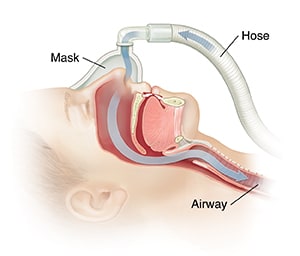
Types of air pressure treatments
There are different types of CPAP. Your doctor or CPAP technician will help you decide which type is best for you:
- Basic CPAP keeps the pressure constant all night long.
- A bilevel device (BiPAP) provides more pressure when you breathe in and less when you breathe out. A BiPAP machine also may be set to provide automatic breaths to maintain breathing if you stop breathing while sleeping.
- An auto CPAP device automatically adjusts pressure throughout the night and in response to changes. These include body position, sleep stage, and snoring.
Online Medical Reviewer: Allen J Blaivas DO
Online Medical Reviewer: Daphne Pierce-Smith RN MSN CCRC
Online Medical Reviewer: Marianne Fraser MSN RN
Date Last Reviewed: 04/01/2023
© 2000-2026 The StayWell Company, LLC. All rights reserved. This information is not intended as a substitute for professional medical care. Always follow your healthcare professional's instructions.


