Dismiss Modal

Management

Hearing Protection at Work: Your Hearing Test

Choose a preferred language

An audiometric test measures how well you hear. It's quick and painless. The Occupational Safety and Health Administration (OSHA) and your employer may require this test each year. Follow through with it. You can't "fail" a hearing test. The test results just help your employer know whether more hearing protection is required.


What to expect

You may be tested in a clinic or in a mobile testing van. The test lasts only a few minutes and is easy to do. An audiologist (hearing specialist) will give you headphones and seat you in a soundproof room. The audiologist will then play tones at many pitches and volumes. When you hear the tones, you press a button or raise your hand.
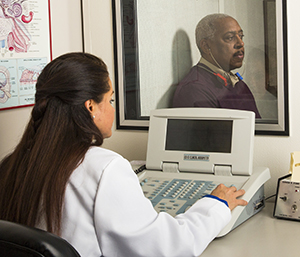
Audiologist performing hearing test on man sitting in booth.


Your test results

The test result is a graph called an audiogram. It shows how well you hear. The result of your first hearing test will be your baseline. Future tests will be compared to your baseline to see whether your hearing has changed. If your test shows a change from your baseline, you may be tested more often. It could mean that you and your employer need to change the type of protection you usually wear.


© 2000-2025 The StayWell Company, LLC. All rights reserved. This information is not intended as a substitute for professional medical care. Always follow your healthcare professional's instructions.

Make an Appointment

Make an Appointment

Find a Doctor

Find a Doctor

Find a Location

Find a Location
Related Articles
Read article
Ear, Nose, and Throat
Managing Balance Problems: Vestibular Rehabilitation Therapy

An inner ear problem can affect your balance. Vestibular rehabilitation therapy can help with your symptoms.

Read article
Ear, Nose, and Throat
Treating Ménière’s Disease: Eating a Low-Salt Diet

Salt contains sodium, which makes your body hold excess fluid. Because Meniere's disease is caused by fluid buildup in the inner ear, eating less sodium may help relieve your symptoms.

Read article
Ear, Nose, and Throat
Caring for a Hearing Aid

A detailed look at how to care for your hearing aid, including daily cleaning and changing batteries. Includes safety tips on keeping hearing aid batteries out of the reach of children and pets.

Read article
Ear, Nose, and Throat
Swallowing Exercises: How to Do Larynx-Lifting Exercises

Larynx-lifting exercises help you increase the strength and mobility of the muscles of your larynx (voice box) over time. This may improve your ability to swallow.

