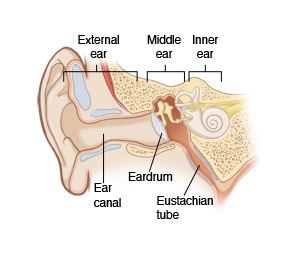
External otitis (also called swimmer’s ear) is an infection in the ear canal. It's often caused by bacteria or fungus. It can occur a few days after water gets trapped in the ear canal (from swimming or bathing). It can also occur after cleaning too deeply in the ear canal with a cotton swab or other object. Sometimes, hair care products get into the ear canal and cause this problem.
Symptoms can include pain, fever, itching, redness, drainage, or swelling of the ear canal. Temporary hearing loss may also occur.
Home care
-
Follow your doctor's instructions for how to carefully clean the ear canal.
-
Use prescribed eardrops as directed. If an ear wick was placed in the ear canal, apply drops right onto the end of the wick. The wick will draw the medicine into the ear canal even if it's swollen closed.
-
You may use over-the-counter medicines to control pain as directed by the doctor, unless another medicine was prescribed. You can also try holding a warm washcloth against your ear.
-
Avoid getting water in the ear until the problem clears up. Use cotton lightly coated with petroleum jelly as an earplug. Don't use plastic earplugs.
Prevention
-
Keep your ears dry. This helps lower the risk of infection. Dry your ears with a towel or hair dryer set on low, after getting wet. Also, use earplugs when swimming.
-
Don't stick any objects in the ear to remove wax.
-
Talk with your doctor about using eardrops to prevent swimmer's ear in case you feel water trapped in your ear canal. You can get these drops over the counter at most drugstores. They work by removing water from the ear canal.
Follow-up care
Follow up with your doctor in 1 week, or as advised.
When to contact your doctor
Contact your doctor or seek medical care right away if:
-
Your ear pain becomes worse or doesn’t improve after 3 days of treatment.
-
You have redness or swelling of the outer ear or it gets worse.
-
You have a headache.
-
You have a fever of 100.4ºF (38ºC) or higher, or as directed by your doctor.
Call 911
Call
-
You have a seizure.
-
You have unusual drowsiness or confusion.
-
You have an unusual painful or stiff neck.
Online Medical Reviewer: Melinda Murray Ratini DO
Online Medical Reviewer: Riley Holtz RN BS
Date Last Reviewed: 06/01/2025
© 2000-2026 The StayWell Company, LLC. All rights reserved. This information is not intended as a substitute for professional medical care. Always follow your healthcare professional's instructions.


