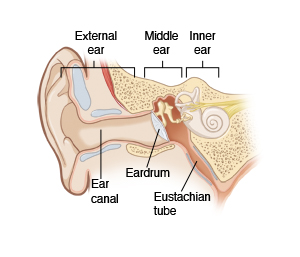
Ménière’s disease is a chronic recurring condition. It's caused by a problem with the inner ear. This is the part of the ear responsible for balance as well as hearing. Symptoms include:
-
Sudden attacks of vertigo. Vertigo is a spinning or whirling feeling that causes balance problems. These attacks often include nausea, vomiting, and sweating. During an attack of vertigo, head movement and body position changes will make symptoms worse.
-
Hearing problems. Hearing is often partly or completely lost during the vertigo attack, then comes back. Over time, though, hearing can be affected.
-
Tinnitus. This is ringing, buzzing, whistling, or roaring noises in the ear. It may come and go or always be present.
-
Feeling of pressure. You may also have a feeling of pressure or fullness in the ear.
Attacks may occur weeks, months, or even years apart. Each episode of vertigo may last 20 minutes to several hours. The symptoms are due to changes in fluid in the inner ear canals. The exact cause is not known.
Treatment for Ménière’s disease may include lifestyle changes, medicines, and physical therapy (vestibular rehabilitation). Surgery may be advised in severe cases.
Home care
Lifestyle changes
These lifestyle changes can help make attacks less frequent or less severe:
-
Reduce your salt intake. Eating too much salt can make this condition worse. Talk to your doctor about ways to limit sodium in your diet.
-
If you smoke, try to quit.
-
Limit alcohol and caffeine.
-
Try to limit stress.
Medicines
You may be prescribed medicine to take during a vertigo attack to help with symptoms. These include anti-vertigo and anti-nausea medicines and diuretics (water pill).
During Attacks
If an attack is about to start or has started, take any medicine you have been prescribed for an attack. Lie down on a firm surface in a darkened room. Stay as still as possible. Stay away from bright light. Don't try to read or watch TV. Don't get up until the spinning passes.
Follow-up care
Follow up with your doctor for further assessment and treatment. If you have been referred to a specialist, make an appointment right away.
When to get medical care
Contact your doctor right away if you have:
-
Symptoms that do not get better or that get worse.
-
Weakness that gets worse.
-
Lasting vomiting.
-
A fever of
100.4 °F (38 ºC) or higher, or as advised by your doctor.
Call 911
Call
-
Fainting.
-
Trouble with speech or movement.
-
An unusual headache, drowsiness, or confusion.
Online Medical Reviewer: Ashutosh Kacker MD
Online Medical Reviewer: Daphne Pierce-Smith RN MSN
Online Medical Reviewer: Ronald Karlin MD
Date Last Reviewed: 07/01/2025
© 2000-2026 The StayWell Company, LLC. All rights reserved. This information is not intended as a substitute for professional medical care. Always follow your healthcare professional's instructions.


