Blepharitis is a redness and swelling (inflammation) of the eyelids. The membrane (conjunctiva) covering the inside of your eyelid and the white of your eye may also become inflamed. Blepharitis can be caused by normal germs (bacteria) on your eyelids or the skin around your eyes. Dandruff or oily skin can also cause blepharitis. Wearing contact lenses or makeup can make your symptoms worse. Blepharitis may be a long-term (chronic) condition that is hard to manage because it tends to come back again and again, especially when the underlying cause is not addressed.
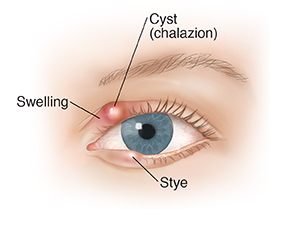
Types of blepharitis
There are 2 types of blepharitis:
-
Anterior blepharitis. This affects the skin of the eyelids, eyelash follicles, and the base of the eyelashes.
-
Posterior blepharitis. This involves the oil-producing glands on your eyelids.
Often both types are present.
What are the symptoms?
A person with blepharitis may have:
-
Redness and irritation of the eyelids
-
Swollen, tender eyelids
-
Blurred vision
-
Itching around your eyelashes
-
Greasy flakes or scales around your eyelashes
-
Hard crusts at the base of your eyelashes. These crusts may cause your eyelashes to fall out.
-
Aversion to bright light (photophobia)
Flakes or crusts can form during the night. If this happens, it may be hard for you to open your eyes in the morning. If blepharitis is not treated promptly, it can lead to an infection at the base of an eyelash or oil gland. This infection is called a stye. Left untreated, it may become a chronic cyst. You may need surgery to remove it.
Online Medical Reviewer: Heather M Trevino BSN RNC
Online Medical Reviewer: Shaziya Allarakha MD
Online Medical Reviewer: Whitney Seltman MD
Date Last Reviewed: 08/01/2021
© 2000-2026 The StayWell Company, LLC. All rights reserved. This information is not intended as a substitute for professional medical care. Always follow your healthcare professional's instructions.


