When you have low vision, you can't see well enough to do certain daily activities. Medicine, surgery, regular glasses, or contact lenses may not help. Your central or side (peripheral) vision, or both, may be reduced.
What causes low vision?
Low vision can be caused by a number of diseases in the eye:
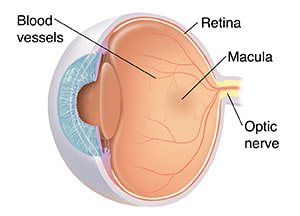
- Blood vessels nourish the retina (the inside lining of the eye where light is focused). Blood vessels may become weak and leak fluid into the eye. Also, blood flow in blood vessels may decrease in some diseases. This causes a lack of oxygen to the retina.
- The macula is the part of the retina that is responsible for clear, sharp vision. It may break down, also causing loss of central vision.
- The optic nerve carries signals from the retina to the brain. It may be damaged by increased eye pressure. It may be unable to send messages to the brain.
- An injury to your eye can also result in low vision. And some people are born with low vision.
What are the symptoms?
The symptoms of low vision depend on the cause of your vision loss and where the problem is in your eye. Symptoms can include:
- Blank spots, dark spots, or wavy lines in the center of your vision
- Blurred, hazy, or cloudy vision, or double vision
- Loss of peripheral vision or color vision
Online Medical Reviewer: Chris Haupert MD
Online Medical Reviewer: Raymond Kent Turley BSN MSN RN
Online Medical Reviewer: Rita Sather RN
Date Last Reviewed: 09/01/2025
© 2000-2026 The StayWell Company, LLC. All rights reserved. This information is not intended as a substitute for professional medical care. Always follow your healthcare professional's instructions.


