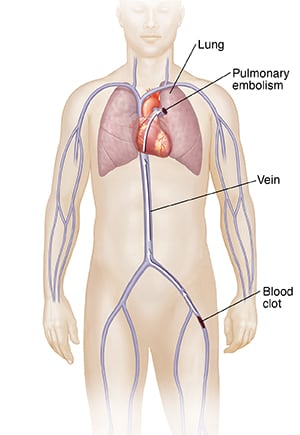
Deep vein thrombosis (DVT) is a condition where a blood clot (thrombus) forms in a deep vein. It may develop in a large vein deep inside the leg, arm, or other part of the body. Complications from DVT can be very serious. They can include pulmonary embolism (PE), chronic venous insufficiency, and post-thrombotic syndrome.
You may hear doctors use the term venous thromboembolism (VTE) to describe DVT and PE. They use the term VTE because these conditions are very closely linked. And because their prevention and treatment are closely linked.
Pulmonary embolism
Pulmonary embolism (PE) happens when part of the clot, called an embolus, separates from the vein. It goes to the lungs and cuts off blood flow. A PE may develop quickly. It's a medical emergency and may cause death.
Call 911
Call
- Chest pain
- Trouble breathing or sudden shortness of breath
- Coughing (may cough up blood)
- Fainting
- Fast heartbeat
- Sweating
You may have bleeding if you take medicine to help prevent blood clots. Call
When to contact your doctor
Contact your doctor if any of these occur:
You have symptoms of a blood clot, such as:
- You have new or worse swelling in your arm or leg.
- Your arm or leg is numb or very painful to touch.
- Your leg hurts when you walk, or your arm hurts when you move it.
- Your arm or leg turns blue or gray.
- You have discomfort when taking a deep breath.
You have any signs of abnormal bleeding:
- Vomiting blood or something that looks like coffee grounds
- Bowel movements that are bloody or dark colored
- Nosebleeds or any other bleeding that does not stop
- Dark red or brown urine
Also let your doctor know if the following is happening:
- Have an injury such as a fall and you hit your head
- Bleed from your gums after brushing your teeth
- Have heavy menstrual periods or bleeding between periods
- Have more bruising than usual after a minor injury
- Have diarrhea, vomit, or cannot eat for more than 24 hours
- Have a fever higher than
100.4°F or 38°C - Cannot take your medicine for any reason
Chronic venous insufficiency and post-thrombotic syndrome
Two other complications of DVT are chronic venous insufficiency and post-thrombotic syndrome.
Chronic venous insufficiency. This may happen following DVT of a leg vein. It means that a vein no longer works as well. It's a long-term condition where blood stays in the vein instead of flowing back to the heart. Pain and swelling in the leg are common symptoms.
Post-thrombotic syndrome. This may also happen after DVT of a leg vein. It's a long-term problem with pain, swelling, and redness. Ulcers and sores can also happen if the condition isn't treated early. These complications and related symptoms may make it hard to walk and take part in daily activities.
Online Medical Reviewer: Anne Fetterman RN BSN
Online Medical Reviewer: Deepak Sudheendra MD
Online Medical Reviewer: Raymond Kent Turley BSN MSN RN
Date Last Reviewed: 03/01/2024
© 2000-2026 The StayWell Company, LLC. All rights reserved. This information is not intended as a substitute for professional medical care. Always follow your healthcare professional's instructions.


