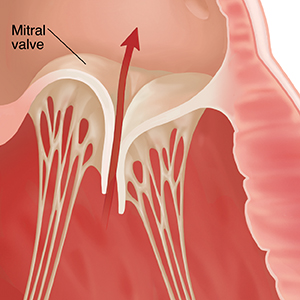
In mitral valve regurgitation, the mitral valve in the heart is leaky. This valve connects the left upper chamber of the heart to the left lower chamber. Blood is supposed to move forward out of the lower chamber to the rest of the body. With a leaky valve, some blood flows backwards into the upper chamber. This reduces forward blood flow out of the heart. It also means the heart has to work much harder to pump the blood out.
Types of treatment
If your condition is mild or moderate, you may not need treatment. Your doctor may just watch your health. Or you may need to take medicines. These include:
-
ACE inhibitors and beta-blockers. These help reduce stress on the heart.
-
Medicines to slow the heart rate or control the heart rhythm.
-
Water pills (diuretics). These reduce swelling and improve symptoms.
-
Blood-thinner medicine to help prevent blood clots.
If the problem is severe, you may need surgery to repair or replace the valve. Surgery is needed right away in some cases.
Complications of mitral valve regurgitation
Problems can include:
-
Atrial fibrillation. This is a heart rhythm problem. It increases the risk for stroke.
-
High blood pressure in the lungs. This is called pulmonary hypertension.
-
Heart failure.
Treatment may help reduce the risk for these complications.
Living with mitral valve regurgitation
-
See your doctor regularly. This will let them check on how you're doing and watch for problems.
-
Take note of any symptoms you feel. They may get worse when you are being active. Talk with your doctor about what kind of exercise is right for you. If your condition is getting worse, you may need to avoid certain activities.
-
Eat a low-salt, heart-healthy diet. This can lower blood pressure and reduce the stress on your heart.
-
Cut back on caffeine and alcohol. This can lower your risk for heart rhythm problems.
-
Make sure all your doctors and your dentist know about your valve problem. In some cases, you may need to take antibiotics before certain medical and dental procedures. These can help prevent an infection that could affect your heart.
When to contact the doctor
If you notice your symptoms are slowly getting worse, plan to see your doctor. You may need surgery or a change of medicine.
Call 911
Call
-
You have severe shortness of breath or chest pain.
-
You notice sudden new symptoms.
Online Medical Reviewer: Callie Tayrien RN MSN
Online Medical Reviewer: Stacey Wojcik MBA BSN RN
Online Medical Reviewer: Steven Kang MD
Date Last Reviewed: 06/01/2025
© 2000-2026 The StayWell Company, LLC. All rights reserved. This information is not intended as a substitute for professional medical care. Always follow your healthcare professional's instructions.


