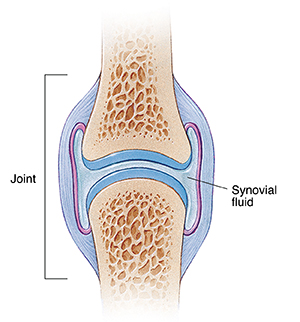
Septic arthritis is an infection in the joint fluid (synovial fluid) and joint tissues. It occurs more often in children than in adults. The infection usually reaches the joints through the bloodstream. In some cases, joints may become infected because of an injection, surgery, or injury.
How to say it
SEHP-tihk
ar-THRI-tihss
What causes septic arthritis?
Different types of bacteria, viruses, and fungi can infect a joint. The types that can cause septic arthritis include:
-
Staphylococci. These are common bacteria that often cause skin infections.
-
Haemophilus influenzae. These are bacteria that can infect the larynx, trachea, and bronchi.
-
Gram-negative bacteria. This group of bacteria includes E. coli (Escherichia coli) and Kingella kingae.
-
Streptococci. This group of strep bacteria can lead to many different diseases.
The most common type of bacteria that cause septic arthritis is called staph (Staphylococcus aureus or S. aureus). These bacteria can enter the body in many ways, such as:
-
An infection that spreads from another place on the body, such as the skin or genitals
-
An infected wound
-
A broken bone that goes through the skin (open fracture)
-
Foreign object that goes through the skin
-
Injury that breaks the skin
Septic arthritis may occur without any known risk factors. But children who have an open skin wound and a weakened immune system may be at greater risk. A weakened immune system can be caused by diabetes, kidney disease, HIV infection, or cancer.
Symptoms of septic arthritis
The most common joints affected by septic arthritis are the knee, hip, shoulder, elbow, and wrist. Most often, only 1 joint is affected. Symptoms may vary in each child. Common symptoms include:
-
Fever
-
Joint pain, often severe
-
Joint swelling
-
Redness in the affected area
-
Warmth around the infected area
-
Limited use of the affected limb, such as not wanting to walk, or limping
-
Guarding the affected area to keep it from being touched or seen
-
Other symptoms of illness, such as vomiting, sore throat, or headache
-
Being grouchy (irritable)
-
Loss of appetite
Diagnosing septic arthritis
Early diagnosis of septic arthritis is important. It prevents long-term (permanent) joint damage. Your child’s healthcare provider will ask about your child’s health history. They'll give your child a physical exam. Tests may also be done, such as:
-
Removal of joint fluid. This test checks for white blood cells and bacteria.
-
Blood tests. These are done to look for bacteria.
-
Phlegm, spinal fluid, and urine tests. These are done to look for bacteria and find the source of infection.
-
X-ray. This test uses a small amount of radiation to make images of internal tissues, bones, and organs.
-
Bone scan. This imaging test uses a tiny amount of a radioactive substance to look for arthritis changes in the joints.
-
MRI. This test uses large magnets and a computer to make detailed images of organs and other tissues.
-
Ultrasound. This test uses sound waves and can see fluid within a joint. It can also be used to guide the removal of joint fluid for testing (needle-guided aspiration).
-
Radionuclide scans. These scans use a tiny amount of a radioactive substance to look at organs and the blood flow to them.
Treatment for septic arthritis
Septic arthritis needs treatment right away with IV (intravenous) antibiotics. This can improve symptoms within 48 hours. But your child will need a longer treatment course to be sure the infection goes away. Some infections caused by fungi need treatment with antifungal medicine. Viral infections aren't treated with medicine.
Pus may be drained from the joint. Pus buildup can damage the joint. The pus is drained with a needle, tube, or surgery.
Other treatments may include:
-
Medicines for pain and fever
-
Physical therapy to keep muscle strength
-
A splint on the joint to ease pain
Talk with your child’s healthcare provider about the risks, benefits, and possible side effects of all treatments.
Possible complications of septic arthritis
Septic arthritis can cause joint damage. If your child’s growth plates in long bones are affected, it may cause an arm or leg to not grow to the full adult length. The growth plate is the part of the bone where new bone is created. This area of the bone helps determine its final adult length. Make sure to follow up with your child's healthcare provider to prevent long-term problems.
When to call your child’s healthcare provider
Call the healthcare provider if your child has any of these:
-
Symptoms that don’t get better or that get worse
-
New symptoms
Featured in
Author: Wheeler, Brooke
Online Medical Reviewer: Liora C Adler MD
Online Medical Reviewer: Pat F Bass MD MPH
Online Medical Reviewer: Raymond Kent Turley BSN MSN RN
Date Last Reviewed: 09/01/2024
© 2000-2026 The StayWell Company, LLC. All rights reserved. This information is not intended as a substitute for professional medical care. Always follow your healthcare professional's instructions.


