Genital herpes is a common sexually transmitted infection (STI). It is caused by the herpes simplex virus (HSV). One out of five teens and adults carry the herpes virus. During an outbreak, it causes small blisters that break open, leaving small, painful sores in the genital area. Over the first few days after infection, scabs form and the sores heal. In females, herpes is most often on the skin just outside the vaginal opening. Blisters can also occur on the buttocks, anus, or cervix, or elsewhere on your skin. In males, the sores are often on the tip, sides, or base of the penis. They can also occur on the scrotum, anus, buttocks, thighs, or elsewhere on your skin.
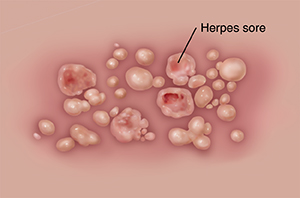
The first outbreak begins 2 to 3 weeks after exposure to an infected sexual partner. It may last 1 to 3 weeks. It may cause headache, muscle ache, and fevers. The first outbreak is often the worst. Because the virus remains in the body even after the sores heal, most people will have more outbreaks. The frequency of outbreaks is different for each person. Some people will never have another outbreak. Others will have several episodes a year. Later outbreaks are often shorter, milder, and less painful. For many, the number of outbreaks tends to decrease over time.
Many factors may trigger an outbreak. These include:
-
Emotional stress.
-
Menstruation.
-
Another illness (cold, flu, or fever from any cause).
-
Overexertion and severe tiredness (fatigue).
-
Weak immune system.
Home care
-
It is very important that you don't have sex until all the herpes sores have healed completely.
-
Wash the affected area gently with mild soap and water. Wash your hands after touching the affected area.
-
You may use over-the-counter pain medicine unless another pain medicine was prescribed. If you have chronic liver or kidney disease or have ever had a stomach ulcer or gastrointestinal bleeding, talk with your health care provider before using these medicines. Also talk with your provider if you are taking medicine to prevent blood clots. Don’t give aspirin (or medicine that contains aspirin) to a child or teen unless their doctor says it is safe. Taking aspirin can put a child at risk for Reye syndrome. This is a rare but very serious condition. It most often affects the brain and the liver.
-
Your provider may prescribe antiviral medicine during the first outbreak. This will help the sores heal faster. Antiviral medicine may also be prescribed so that you have it ready to take at the first sign of another outbreak. This will help the symptoms go away sooner. For people with frequent outbreaks, daily preventive therapy may be prescribed. This will help reduce the frequency of attacks. Daily preventive therapy may also reduce risk of spread of herpes to your sexual partner. Discuss the risks and benefits of daily therapy with your provider.
-
If you are pregnant now or may become pregnant in the future, let your provider know that you have had herpes. This may affect the way your baby is delivered.
-
If you are breastfeeding, the herpes virus cannot be passed to your baby through breast milk. But wash your hands carefully before and after feeding your baby. Make sure you have no sores on your breasts. If you do have sores on your breasts, don't let the baby come in contact with the sores.
Preventing spread to others
The virus is spread by sexual contact with someone who has the herpes virus. The risk of spread is highest when the sores are present. But there is a chance of spreading the virus even when sores aren't visible. After you are infected, the virus travels to nerve cells near the spine. The virus stays there until something triggers it to become active again, which causes a new outbreak of sores and blisters. Tell future sexual partners that you have herpes and that they may become infected.
To reduce the risk of passing the virus to a partner who has never had herpes, avoid sex at the first sign of an outbreak and until the sores are fully healed. Latex barriers, such as condoms, reduce the risk of spread between outbreaks if the infected site is covered. But they don't guarantee protection. Taking daily preventive medicine can prevent herpes outbreaks and lower the risk of spreading the virus to your partners.
Follow-up care
Follow up with your health care provider, or as advised.
People who have just learned that they have herpes may feel upset. Getting the facts about herpes can help you feel more in control. Follow up with your provider or the public health department for complete STI screening, including HIV testing.
When to get medical advice
Contact your health care provider right away if any of these occur:
-
Inability to urinate due to pain
-
Swelling or increasing redness in the genital area
-
Discharge from the vagina or penis
-
Increasing back or belly pain
-
Rash or joint pain
Call 911
Call 911 or get medical care right away if you have:
-
Abnormal drowsiness, weakness, or confusion.
-
Worsening headache or stiff neck.
Online Medical Reviewer: Lalitha Kadali
Online Medical Reviewer: Raymond Kent Turley BSN MSN RN
Online Medical Reviewer: Sabrina Felson MD
Date Last Reviewed: 03/01/2025
© 2000-2026 The StayWell Company, LLC. All rights reserved. This information is not intended as a substitute for professional medical care. Always follow your healthcare professional's instructions.


