HPV (human papillomavirus) is a very common family of over 200 viruses. Some types (strains) of genital HPV can spread through vaginal, anal, or oral sex. They can cause abnormal changes (dysplasia) in the cells of a woman’s cervix or vagina, or a woman's or man's anus. Depending on the strain of infection, these cellular changes can lead to cervical or anal cancer if not treated.
Also, some strains of HPV can cause genital warts. These affect the moist tissues of the genital area. They may be too small to be seen. Or they may be small, flesh-colored bumps. Or cauliflower-like lesions.
HPV is the most common type of sexually transmitted infection (STI) in the U.S. Many people carry HPV. But it often has no symptoms. The virus may first be found when signs of dysplasia or warts are found during a Pap test.
How does HPV spread?
HPV lives inside the skin and mucous membranes. It spreads when skin carrying the virus touches other skin. Genital HPV most often spreads during sexual contact. Condoms and other barriers help protect against the spread by preventing skin contact. But condoms may not cover all affected skin. So they may not provide complete protection. There is no cure for HPV. Even if symptoms go away, the virus may stay in the body. It often doesn’t cause symptoms. So many people who have HPV don’t even know it. Pregnant people with HPV may pass on the infection to their unborn baby.
When dysplasia occurs
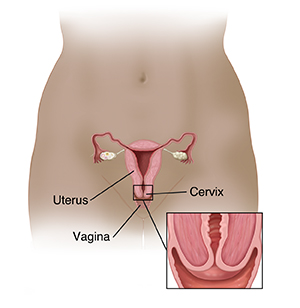
The cervix is the narrow canal at the bottom of the uterus. It’s made up of layers of cells that normally change as they grow. Dysplasia occurs when HPV causes some cervical cells to change in abnormal ways. These abnormal cells can be found with a Pap test. Left untreated, abnormal cells can develop into cancer. A similar process can occur in the vagina or anus if there is HPV present.
When warts form
Certain strains of HPV can make skin cells multiply more often than they should. These extra skin cells build up into warts. Warts can form on the cervix. They can also form around or inside the genitals and anus, and sometimes in the mouth. Treating warts helps keep HPV from spreading to sex partners. The HPV strains that cause genital warts are not the same strains that increase the risk of cancer.
HPV vaccine
A vaccine is available that protects against certain strains of HPV. It's strongly advised that all U.S. teens and young adults get the HPV vaccine. It's recommended at ages 11 to 12. But sometimes it can be given as young as age 9. A catch-up dose may be given up to age 26 for adults who were not vaccinated as a teen. It can sometimes be given from ages 27 to 45 in people who are unlikely to have been already exposed to HPV. Talk with your provider to learn more.
Online Medical Reviewer: Rita Sather RN
Online Medical Reviewer: Sabrina Felson MD
Online Medical Reviewer: Shaziya Allarakha MD
Date Last Reviewed: 03/01/2024
© 2000-2026 The StayWell Company, LLC. All rights reserved. This information is not intended as a substitute for professional medical care. Always follow your healthcare professional's instructions.


