Cigarette smoke damages lung tissue and irritates airways. This makes breathing harder. Smoking also damages tiny hairs (cilia) in the airways. Then the cilia can’t do their job of clearing mucus, dirt, and germs from the lungs. It’s never too late to quit smoking. Your health will start to improve on the same day you put out your last cigarette.
You don’t have to quit alone
You may be more likely to quit for good if you get support from others.
-
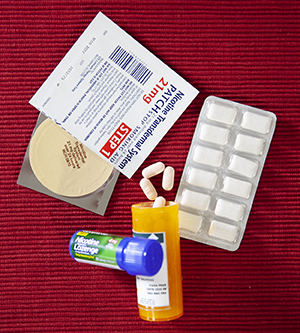
Talk with your healthcare provider about your plans to quit. Ask about medicines that can help. Some contain nicotine and some don't. Some you can get by prescription. You can buy others over-the-counter. These medicines help control the desire to use tobacco. And they control symptoms that occur when people try to quit. Others slowly reduce nicotine levels in the body. Your provider can tell you about your choices, such as:
-
Medicines taken by mouth (oral), such as bupropion or varenicline
-
Nicotine replacement therapy, such as gum, lozenge, a patch, inhaler, or nasal spray
-
-
Join a support group or get advice from an ex-smoker.
-
Ask other smokers in your home to quit with you.
Tips for quitting smoking
There isn’t 1 right way to stop smoking. Everyone quits in their own way. Some of these tips may help:
-
Make a list of reasons you want to quit. Keep this list and read it often.
-
Pick a date to quit smoking. Then stick to it.
-
List the things that make you want to smoke. Think of ways to stay away from these triggers.
-
Set goals for yourself. Try going for 1 week without smoking. Reward yourself when you meet your goals.
-
If you don’t quit the first time, keep trying! Many people have to try more than once before they stop smoking for good.
To learn more
For more help, try these resources:
-
Find resources and live support to quit smoking at Smokefree.gov at https://smokefree.gov/tools-tips/get-extra-help/speak-to-an-expert
-
National Cancer Institute Smoking Quitline: 877-44U-QUIT (877-448-7848)
Featured in
Online Medical Reviewer: Allen J Blaivas DO
Online Medical Reviewer: Daphne Pierce-Smith RN MSN
Online Medical Reviewer: Ronald Karlin MD
Date Last Reviewed: 09/01/2024
© 2000-2026 The StayWell Company, LLC. All rights reserved. This information is not intended as a substitute for professional medical care. Always follow your healthcare professional's instructions.


