COPD stands for chronic obstructive pulmonary disease. It means the airways in your lungs are blocked (obstructed). This makes it hard to breathe. You may have trouble with daily activities because of shortness of breath. Over time, the shortness of breath often gets worse. This makes it harder to take care of yourself and take part in activities. Chronic bronchitis and emphysema are two common types of COPD.
How did I get COPD?
Most people get COPD from smoking. Cigarette smoke damages lungs. This can develop into COPD over many years. If you smoke or used to smoke, you are at a higher risk of having COPD. Exposure to air pollution in the home or at work, family history, and respiratory infections like pneumonia also increase your risk.
How COPD affects you
COPD makes you work harder to breathe. Air may get trapped in the lungs. This prevents your lungs from filling completely with fresh oxygen-filled air when you breathe in (inhale). It's harder to take deep breaths, especially when you are active and start breathing faster. Over time, your lungs may become enlarged, filled with air that does not transfer oxygen into the blood. These problems lead to shortness of breath (also called dyspnea). Hoarse, whistling breathing (wheezing) and a chronic cough are common. So is feeling tired and worn-out (fatigue).
What happens in chronic bronchitis?
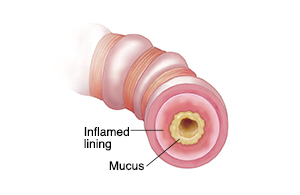
The cells in the airways make more mucus than normal. The mucus builds up, narrowing the airways. This means less air travels into and out of the lungs. The lining of the airways may also become swollen (inflamed). This causes the airways to narrow even more.
What happens in emphysema?
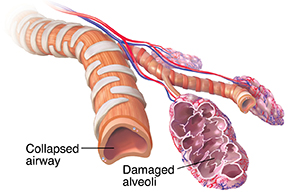
The small airways are damaged and lose their stretchiness. The airways collapse when you exhale. This causes air to get trapped in the air sacs. So less oxygen enters the blood vessels. And less oxygen is delivered to all the cells of your body. This makes it hard to breathe.
Damage to cilia
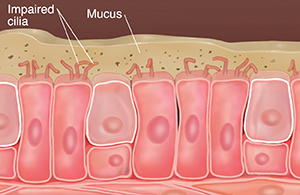
Cilia are small hairs that line and protect the airways. Smoking damages the cilia. Damaged cilia can’t sweep mucus and particles away. Some of the cilia are destroyed. This damage makes COPD worse.
How daily issues affect your health
Many things in your daily life impact your health. This can include transportation, money problems, housing, access to food, and child care. If you can’t get to medical appointments, you may not receive the care you need. When money is tight, it may be difficult to pay for medicines. And living far from a grocery store can make it hard to buy healthy food.
If you have concerns in any of these or other areas, talk with your healthcare team. They may know of local resources to assist you. Or they may have a staff person who can help.
Online Medical Reviewer: Chris Southard RN
Online Medical Reviewer: Rajadurai Samnishanth Researcher
Online Medical Reviewer: Rita Sather RN
Date Last Reviewed: 01/15/2007
© 2000-2026 The StayWell Company, LLC. All rights reserved. This information is not intended as a substitute for professional medical care. Always follow your healthcare professional's instructions.


