When you have lung problems, it may be hard for you to breathe. Stress can make it worse. Learn to relax and control stress. This can prevent shortness of breath and panic.
When anxiety takes over
When you feel short of breath, your neck, shoulder, and chest muscles tense. You become anxious and start to breathe faster. Your breathing muscles get tired and trap air in your lungs. Your chest may feel tight. Anxiety increases and you may start to panic.
Stop panic before it starts
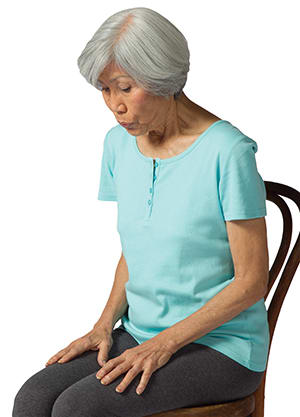
The key to controlling panic is to break the cycle before it starts. When you are becoming short of breath, do the following:
- Sit, relaxing your arms and shoulders.
- Lean forward slightly, resting your upper body on your forearms.
- Breathe in slowly through your nose while counting to 2.
- Hold your lips together as if you are trying to whistle or blow out a candle.
- Breathe out slowly and gently through your pursed lips while counting to 4.
- Repeat these steps as needed.
Learn to relax
Control stress by staying away from things that trigger stress and by relaxing when you start feeling tense. Find a quiet place and sit or lie in a comfortable position. Close your eyes and try the following:
- Take a deep breath in and slowly release it. Repeat this 2 more times. Picture yourself in an ideal place, doing something you enjoy. Stay in that place until you feel relaxed.
- Slowly tense, then relax, each part of your body. Start with your toes and work up to your scalp. As you breathe in, tighten the muscles. Keep them tight for several seconds. Then relax as you breathe out.
- You can also relax by doing tai chi or yoga, praying, meditating, or listening to music or relaxation recordings.
Contact your doctor
Contact your doctor about how you're feeling. Stress and anxiety can be serious. It's important for your doctor to understand what's going on and how it's affecting your life. Talk about what strategies or treatments may be right for you.
Online Medical Reviewer: Andrew D Schriber MD
Online Medical Reviewer: Jessica Gotwals BSN MPH
Online Medical Reviewer: Marianne Fraser MSN RN
Date Last Reviewed: 03/01/2024
© 2000-2026 The StayWell Company, LLC. All rights reserved. This information is not intended as a substitute for professional medical care. Always follow your healthcare professional's instructions.


