An abdominal ultrasound is an imaging test. From outside your body, it uses sound waves to form pictures of the organs in your belly (abdomen). It can help find problems such as gallstones, kidney stones, or liver disease. It can also see many blood vessels in the belly. If needed as part of your exam, the blood flow in these blood vessels can also be checked. Ultrasound does not use radiation and does not have any known risks.
Before your test
-
Follow any directions you’re given for not eating or drinking before the procedure.
-
Follow all other instructions given by your doctor.
-
Leave jewelry at home.
-
Wear loose, comfortable clothes.
During your test
-
You may be asked to put on a gown.
-
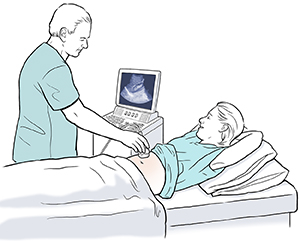
You will lie on an exam table with your belly exposed.
-
A nongreasy gel will be put on your skin.
-
The sonographer (the person who does the test) will use a handheld probe (transducer) against your belly. This probe helps create images of your abdominal organs. The sonographer can answer questions about the test, but only your doctor will discuss results with you.
-
You may see the pictures of your organs on the screen.
-
Certain organs, like the liver, can be biopsied during an ultrasound. This is known as an ultrasound-guided needle biopsy. It requires additional steps. Your doctor can discuss these details with you.
Your test results
Your doctor will discuss the test results with you during a follow-up visit or over the phone. Your next appointment is: _________________
Online Medical Reviewer: Jen Lehrer MD
Online Medical Reviewer: Rita Sather RN
Online Medical Reviewer: Tara Novick BSN MSN
Date Last Reviewed: 06/01/2025
© 2000-2026 The StayWell Company, LLC. All rights reserved. This information is not intended as a substitute for professional medical care. Always follow your healthcare professional's instructions.


