Pelvic floor muscle exercises are done to help strengthen the muscles in your pelvic floor. They are easy to learn and simple to do. And if you do them right, no one can tell you’re doing them. You can do them almost anywhere. Your healthcare provider, nurse, or physical therapist can answer any questions you have and help you get started. These are also called Kegel exercises.
A weak pelvic floor
The pelvic floor muscles may weaken. This can happen because of any of these:
-
Aging
-
Pregnancy
-
Vaginal childbirth
-
Injury
-
Surgery
-
Chronic cough
-
Lack of exercise
If the pelvic floor is weak, your bladder and other pelvic organs may sag out of place. The urethra may open too easily. This can allow urine to leak out. Pelvic floor muscle exercises can help you strengthen your pelvic floor muscles. They can better support your pelvic organs and control your urine flow.
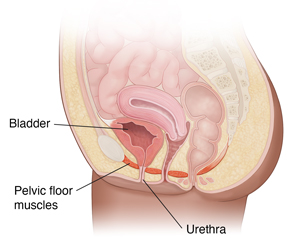
How to do pelvic floor muscle exercises
Try each of the pelvic floor muscle exercises below. When you’re doing them, try not to move your leg, buttock, or stomach muscles:
-
Squeeze as if you are stopping your urine stream. But do it when you’re not urinating.
-
Tighten your rectum as if trying not to pass gas. Squeeze your anus, but don’t move your buttocks.
Tip: Place 1 or 2 fingers in the vagina. Squeeze your finger with your vagina. This will help you to learn which muscles to tighten.
Try to hold each pelvic floor muscle exercise for a slow count to 5. You probably won’t be able to hold it for that long at first. But keep practicing. It will get easier as your pelvic floor gets stronger. At some point, your healthcare provider may advise you to use special weights. You place these in your vagina before you do these exercises. This can help make the exercises even more effective. Talk to your healthcare provider if you have trouble doing the exercises.
Helpful tips
Here are some tips to follow:
-
Do pelvic floor muscle exercises as often as you can. The more you do them, the faster you’ll feel the results.
-
Pick an activity you do often as a reminder. For instance, do your these exercises every time you sit down.
-
Tighten your pelvic floor before you sneeze, get up from a chair, cough, laugh, or lift. This can help prevent urine, gas, or stool leakage.



