It’s normal to worry about your baby’s health. Generally, you will feel your baby start to move in your 2nd trimester. Often around 16 to 24 weeks. Learning the pattern of your baby's movements is one way to know what's normal for you and baby. This is called a kick count. Experts vary on how many movements you should feel within a set amount of time. Talk with your provider about how many movements you should feel.
How to count kicks
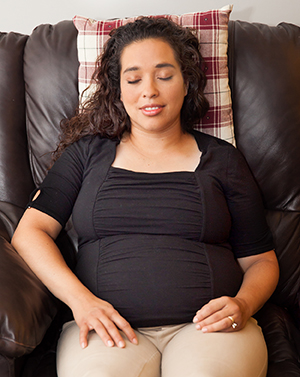
Here is just one way to do kick counts. Always follow your provider's instructions. Starting at 28 weeks, count your baby's movements daily. Time how long it takes you to feel 10 kicks, flutters, swishes, or rolls. Ideally, you want to feel at least 10 movements in 2 hours. You will likely feel 10 movements in less time than that.
Here are tips for counting kicks:
-
Choose a time when the baby is active, such as after a meal.
-
Sit comfortably or lie on your side.
-
The first time the baby moves, write down the time.
-
Count until the baby has moved
10 times. This can take from20 minutes to2 hours. -
If you haven't felt 10 kicks by the end of 2 hours, call your provider for next steps.
-
Try to do it at the same time each day.
When to call your healthcare provider
Follow your provider's instructions about when to call about your baby's movements. Don't hesitate to call if you have concerns.
Call your provider right away if:
-
Your baby moves fewer than
10 times in 2 hours. -
Your baby moves much less often than on the days before.
-
You haven't felt your baby move all day.
Featured in
Online Medical Reviewer: Heather M Trevino BSN RNC
Online Medical Reviewer: Stacey Wojcik MBA BSN RN
© 2000-2026 The StayWell Company, LLC. All rights reserved. This information is not intended as a substitute for professional medical care. Always follow your healthcare professional's instructions.


