Dismiss Modal

Symptoms

Pregnancy: Your First Trimester Changes

Choose a preferred language

The first trimester is a time of rapid development for your baby. Because your baby is growing so quickly, it is important that you start a healthy lifestyle right away. By the end of the first trimester, your baby has formed all of its major body organs and weighs just over an ounce.


Month 1 (weeks 1 to 4)

The placenta (the organ that nourishes your baby) begins to form. The brain, spinal cord, heart, gastrointestinal tract, and lungs begin to develop. Your baby is about ¼ inch long by the end of the first month.
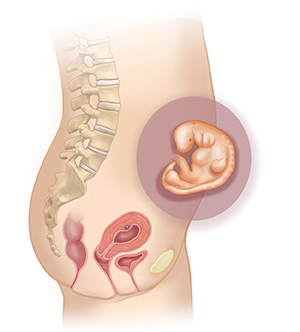
Side view of female body showing reproductive system and inset of 1 month embryo.


Month 2 (weeks 5 to 8)

All of your baby’s major body organs form. The face, fingers, toes, ears, and eyes appear. By the end of the month, your baby is about 1 inch long.
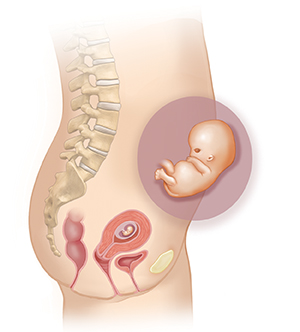
Side view of female body showing reproductive system and inset of 2 month embryo.


Month 3 (weeks 9 to 12)

Your baby can open and close its fists and mouth. The sexual organs begin to form. As the first trimester ends, your baby is about 3 inches long.
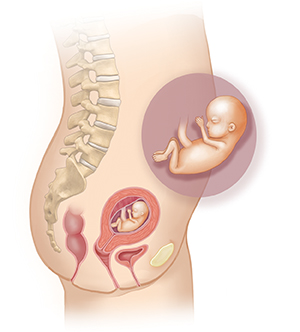

Side view of female body showing reproductive system and inset of 3 month embryo.

© 2000-2025 The StayWell Company, LLC. All rights reserved. This information is not intended as a substitute for professional medical care. Always follow your healthcare professional's instructions.

Make an Appointment

Make an Appointment

Find a Doctor

Find a Doctor

Find a Location

Find a Location
Related Articles
Read article
OB/GYN
Anemia During Pregnancy

Anemia in pregnant women is often caused by not having enough iron in the blood. It is common in pregnancy and very easy to treat.

Read article
OB/GYN
Severe Morning Sickness (Hyperemesis Gravidarum)

Severe nausea and vomiting that doesn't let up during pregnancy is not normal and can result in dehydration and weight loss. Learn about what you can do.

Read article
OB/GYN
Hyperemesis Gravidarum

Hyperemesis gravidarum is a severe form of morning sickness that can affect some women during pregnancy. Symptoms include severe nausea and vomiting.

Read article
OB/GYN
Oligohydramnios

Read on to learn about oligohydramnios, including causes, diagnosis, and how to manage it.


