Dismiss Modal

Symptoms

Pregnancy: Your Second Trimester Changes

Choose a preferred language

Each day, you and your baby are changing and growing together. Here’s a quick look at what’s happening to both of you.


How you are changing

Even when you don’t notice it, your body is adapting to meet the needs of your growing baby. The changes in your body might also affect your moods.


Your body

Your uterus expands as your baby grows. As the weeks go by, you will feel more pressure on your bladder, stomach, and other organs. You may notice some skin color changes on your forehead, nose, or cheeks. Freckles may darken, and moles may grow. You may notice a darker line on your abdomen between your belly button and pubic bone in the midline.


Your moods

The second trimester is often easier than the first. Still, be prepared for mood swings. These are from the increase in hormones made by your body. Hormones are chemicals that affect the way organs work. These mood swings are a normal part of pregnancy.


How your baby is growing


Month 4

Your baby’s heartbeat may be heard with a Doppler (handheld ultrasound device) by 9 to 10 weeks. Eyebrows, eyelashes, and fingernails begin to form.
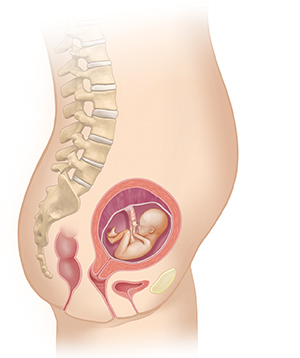
Side view of female body showing reproductive system and 4 month fetus.


Month 5

You may feel your baby move. After a growth spurt, your baby nears 10 inches.
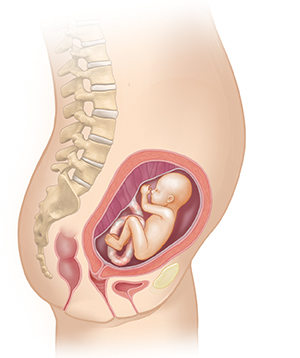
Side view of female body showing reproductive system and 5 month fetus.


Month 6

Your baby’s fingerprints have formed. Your baby weighs about 1 to 2 pounds (0.45 to 0.91 kg) and is about 12 inches long.
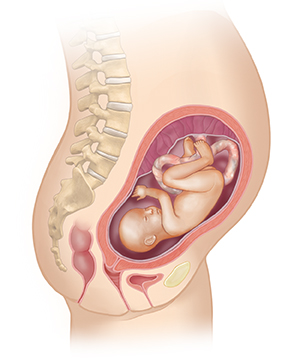
Side view of female body showing reproductive system and 5 month fetus.

© 2000-2025 The StayWell Company, LLC. All rights reserved. This information is not intended as a substitute for professional medical care. Always follow your healthcare professional's instructions.

Make an Appointment

Make an Appointment

Find a Doctor

Find a Doctor

Find a Location

Find a Location
Related Articles
Read article
OB/GYN
Breech Presentation

With breech presentation, your baby is in a buttocks-first or feet-first position. Babies are usually in a head-first position. A breech presentation can make it hard for the baby's head to fit through the birth canal during delivery. Here's what you need to know.

Read article
OB/GYN
Bleeding During Early Pregnancy

Bleeding early in pregnancy isn't uncommon, and in most cases, nothing is wrong. Still, it's a good idea to let your healthcare provider know if it happens.

Read article
OB/GYN
Back Pain During Pregnancy

As your body changes during pregnancy, your back must work in new ways. This can be painful if your back isn't prepared.

Read article
OB/GYN
Abdominal Pain and Early Pregnancy

Some pain and bleeding are common early in pregnancy. Often they stop, and you can go on to have a normal pregnancy. Other times the pain or bleeding can be signs of a miscarriage or ectopic pregnancy. Read on for more information.



