As the baby grows, your body changes, too. You may also see signs that your body is getting ready for labor. Be patient. Within a few more weeks, your baby will be born.
How you are changing
Your body is preparing for the birth of your baby. Some of the most common changes are listed below. If you have any questions or concerns, ask your healthcare provider:
-
You’ll gain more weight from fluids, extra blood, and fat deposits.
-
Your breasts will grow as your body gets ready to feed the baby. They may be more tender. You may also notice a slight yellow or white discharge from the nipples.
-
Discharge from your vagina may increase. This is normal.
-
You might see some skin color changes on your forehead, cheeks, or nose. Most of these will go away after you deliver.
-
You may have symptoms such as heartburn, trouble sleeping, and some shortness of breath due to the growing fetus.
-
Your belly button may stick out.
-
Near term, you may feel the baby "dropping" or moving downward toward the pelvis.
-
You may get hemorrhoids from pressure of the growing baby on rectal veins.
How your baby is growing
Month 7
Your baby can open and close their eyes and weighs around 4 pounds (1.8 kg). The baby's bones are fully formed but soft. The baby's movements are pretty forceful. The hair on your baby's body called lanugo, starts to fall off. The lungs are not fully developed, but practice "breathing" movements occur.
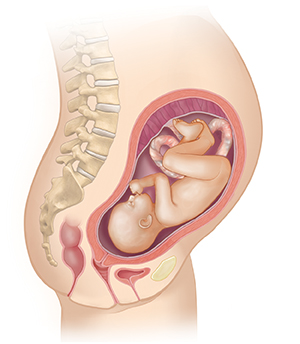
Month 8
Your baby is building up body fat and weighs around 6 pounds (2.7 kg). The protective waxy coating around the baby called vernix, gets thicker. Your baby is now getting bigger and has more fat stores. Due to reduced space in the uterus, the baby's movements may become less forceful. But you will still feel the wiggles and stretches as your little one moves.
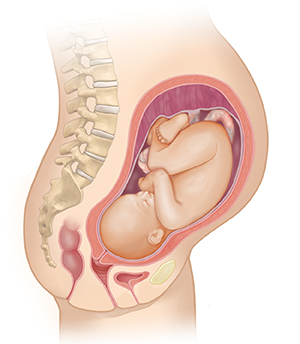
Month 9
Your baby weighs nearly 7 pounds (3.2 kg) and is about 19 to 21 inches long. The baby's organs are ready to function on their own. In most pregnancies, the baby may turn into a head-down (cephalic) position for birth as the due date approaches. In other words, any day now...
When to call your healthcare provider
Seek medical help right away for any of the following:
-
Reduced or absent fetal movements
-
Bleeding or excess watery discharge from the vagina
-
Excessive swelling in your feet, legs, or other areas of your body
-
Severe headache, nausea, rash, bleeding from any site, or yellowing of the eyes or skin
-
Severe belly pain or contractions
-
Fever



