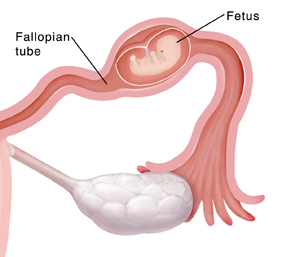
An ectopic pregnancy means that a fetus is growing outside of the uterus. Most often it happens in the fallopian tube. The fetus can't survive in the fallopian tube. There's no way to save this pregnancy. An ectopic pregnancy is very serious. It can lead to severe internal bleeding as the growing fetus tears the fallopian tube. It can threaten the life of the pregnant person.
Methotrexate is a medicine given for ectopic pregnancy. It stops the fetus from growing. The pregnant person's body then usually absorbs the fetal tissue. Methotrexate is an alternative to surgery. The advantage of this treatment is that it prevents the risks of surgery. These risks include bleeding, infection, injury to the body, and the side effects of anesthesia. Surgery removes the fetus from the fallopian tube. Or it removes the fallopian tube itself. If surgery removes the fetus only, you may have scarring of the fallopian tube and infertility.
Methotrexate is given as a shot (injection). After treatment, you may have mild belly (abdominal) pain or cramping. Or you may have nausea and vomiting, diarrhea, or severe tiredness (fatigue).
There are some cases when methotrexate can't be used. Tell your doctor if you have other health conditions, especially peptic ulcers, pulmonary disease, kidney disease, or liver disease.
You'll have your blood taken a few times in the weeks after the methotrexate injection. This is to make sure your pregnancy hormone level (HCG) is getting lower. This shows that the pregnancy has ended, and the fetus is no longer growing. It may take about 4 weeks for your level to drop to 0.
Usually only one injection is needed. But you may need more than one, depending on your situation.
Home care
These guidelines will help you care for yourself at home:
-
You may go back to normal activities if you don’t have heavy bleeding or pain.
-
To prevent infection during treatment and until the bleeding completely stops:
-
Don’t have sex for as long as your doctor tells you.
-
Use sanitary pads instead of tampons.
-
Don’t wash out the inside of your vagina (douche).
-
-
Don’t use alcohol, any vitamins with folic acid (vitamin B-9), or penicillin until your HCG level is back to 0.
-
Don’t take aspirin or other anti-inflammatory medicines, such as ibuprofen and naproxen, for 1 week after methotrexate treatment, or until your doctor says it’s okay.
-
You may use acetaminophen to control pain. Or another pain-relieving medicine might be prescribed. If you have chronic liver disease, talk with your doctor before using these medicines.
-
Don't eat gas-producing foods, such as beans and cabbage. These might make abdominal pain worse.
-
Stay out of the sun during treatment. Methotrexate may cause you to be sensitive to the sun.
-
Use birth control for 4 to 6 months after treatment or as long as your doctor tells you to.
-
If you feel sadness or grief after pregnancy loss, it may help to talk about your feelings with family and friends, or with a counselor.
Follow-up care
Follow up with your doctor, or as advised for repeat HCG blood testing.
When to get medical care
Contact your doctor right away if you:
-
Have pain in your lower belly that gets worse.
-
Have heavy vaginal bleeding (soaking one new pad an hour over 3 hours).
-
Have repeat vomiting, or you can't keep down fluids because of nausea.
-
Faint, or feel dizzy or weak.
-
Have a fever of 100.4°F (38°C) or higher, or as advised by your doctor.
Featured in
Online Medical Reviewer: L Renee Watson MSN RN
Online Medical Reviewer: Sravani Chintapalli Researcher
Online Medical Reviewer: Tennille Dozier RN BSN RDMS
Date Last Reviewed: 06/01/2025
© 2000-2026 The StayWell Company, LLC. All rights reserved. This information is not intended as a substitute for professional medical care. Always follow your healthcare professional's instructions.


