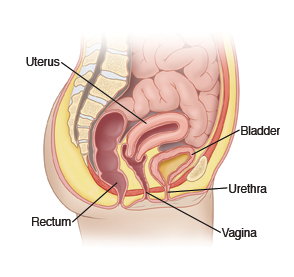
Any object placed inside the vagina is called a vaginal foreign body. This includes tampons, birth control devices, and sex toys. In some cases, objects not designed for the vagina may be placed inside.
If an object is left inside the vagina too long or becomes stuck, it can cause symptoms. It can also lead to infection and damage nearby tissues.
Symptoms can include abnormal or bad-smelling discharge. Bleeding, redness, swelling, or rash may also occur. Some women may feel pain or pressure in or around the vagina.
Treatment includes removing the object. Once the object is removed, symptoms should go away. If the object caused an infection, antibiotics may be given.
Home care
-
If you’re prescribed any medicines, take them as directed.
-
Don’t douche unless advised to by your healthcare provider.
-
Wait until all symptoms are gone before having sex.
-
Check with your provider before using tampons. If it’s OK, remember to remove each tampon you use after 6 to 8 hours or sooner.
-
If you have new symptoms or any questions or concerns, contact your healthcare provider.
Follow-up care
Follow up with your healthcare provider, or as advised.
When to get medical advice
Call your healthcare provider right away if any of the following occur:
-
Your symptoms don’t improve, or they get worse.
-
You develop pain in the belly or groin, especially if it gets worse with walking.
-
You have burning or pain when urinating.
-
You have a fever of 100.4ºF (38ºC) or higher, or as directed by your healthcare provider.
Call 911
Call 911 or get medical care right away if you:
-
Feel weak, dizzy, or faint.
-
Have an unusually large amount of bleeding from your vagina
Featured in
Online Medical Reviewer: Eric Perez MD
Online Medical Reviewer: Ronald Karlin MD
Online Medical Reviewer: Tara Novick BSN MSN
Date Last Reviewed: 12/01/2022
© 2000-2026 The StayWell Company, LLC. All rights reserved. This information is not intended as a substitute for professional medical care. Always follow your healthcare professional's instructions.


