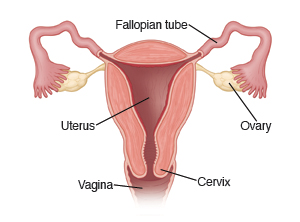
Trichomonas vaginal infection is often called trich. It is caused by a parasite that is passed during sex. This makes trich a sexually transmitted infection (STI). Both sexes can get trich, but it is more common in females.
Most people who have trich don’t have any symptoms at first. If symptoms do occur, they may take weeks or months to develop.
Symptoms in females can include:
-
Thin discharge from the vagina that may smell bad and be clear, white, gray, green, or yellow in color.
-
Itching, burning, redness, or soreness in or around the vagina.
-
Pain in the lower belly.
-
Frequent urination or pain and burning during urination.
-
Pain during sex.
Symptoms in males are not very common. They may have trich and pass it on during sex without knowing they were ever infected.
Trich is most often treated with antibiotics. Without treatment, trich can increase the risk of more serious health problems such as:
-
Pelvic inflammatory disease.
-
Preterm delivery (giving birth to a baby early if you’re pregnant).
-
HIV and certain other STIs.
Home care
-
Take the antibiotics you’re prescribed exactly as directed. Finish all of the medicine, even if your symptoms go away.
-
Don't drink alcohol until you’re done with your treatment.
-
Tell any partners you have sex with that you have trich. They will need to be tested for trich and possibly treated as well.
-
Don't have sex until 7 to 10 days after you and any partners you have sex with are confirmed to have been treated.
Prevention
The only way to prevent getting trich or any other STI is to not have sex. If you choose to have sex, then take steps to lower your health risks:
-
Use condoms when having sex.
-
Limit the number of partners you have sex with.
-
Get tested regularly for STIs. Ask any partner you have sex with to do the same.
-
Don’t have sex with anyone who has symptoms that may be due to an STI.
Follow-up care
Follow up with your doctor, or as advised. Testing will likely be done to make sure that the infection has cleared.
When to get medical advice
Contact your doctor right away if:
-
You have a fever of 100.4ºF (38ºC) or higher, or as directed by your doctor.
-
Your symptoms get worse, or they don’t go away even after completing your treatment.
-
You have new pain in the lower belly or pelvic region.
-
You have side effects that bother you or a reaction to the medicine you’re taking.
-
You or any partners you have sex with have new symptoms, such as a rash, joint pain, or sores.
Featured in
Online Medical Reviewer: Daniel N Sacks MD
Online Medical Reviewer: Donna Freeborn PhD CNM FNP
Online Medical Reviewer: Heather Trevino
Date Last Reviewed: 07/01/2025
© 2000-2026 The StayWell Company, LLC. All rights reserved. This information is not intended as a substitute for professional medical care. Always follow your healthcare professional's instructions.


