Management

After Leg Amputation: Keeping Your Other Leg Healthy

Choose a preferred language

Caring for your other leg is as important as caring for your limb. The skin or circulation problem that may have led to the amputation could develop in your other leg, too.


Skin care

  • Clean and check your skin every day, just as you do the skin on your limb.

  • Use a mirror to check your foot for cracks and sores.


Foot care

  • Wear a firm shoe with a low heel and a closed toe to prevent cuts and infections.

  • Trim your toenails often so they don’t become ingrown. Cut straight across the nail. Your healthcare provider or physical therapist may advise having this done by a foot specialist (podiatrist).
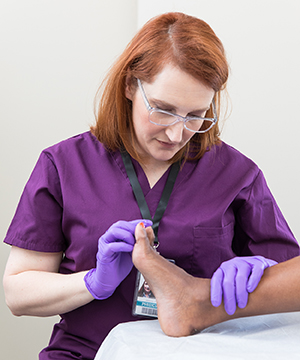
    Healthcare provider examining woman's foot.

Online Medical Reviewer: Banerjee, Rahul, MD

Online Medical Reviewer: Berry, Judith, PhD, APRN

Date Last Reviewed: 10/01/2024

© 2000-2026 The StayWell Company, LLC. All rights reserved. This information is not intended as a substitute for professional medical care. Always follow your healthcare professional's instructions.


Make an Appointment

Make an Appointment

Find a Doctor

Find a Doctor

Find a Location

Find a Location

Related Services

Orthopedics Center

Related Articles
Read article
Orthopedics
Preventing Osteoporosis: Meeting Your Calcium Needs

Your body needs calcium to build and repair bones. But it can't make calcium on its own. That's why it's important to eat calcium-rich foods. Some foods are naturally rich in calcium. Others have calcium added.

Read article
Orthopedics
Wrist Supination (Active Range of Motion)

Follow these directions to do a wrist supination exercise for your hand and wrist.

Read article
Orthopedics
Elbow Extension (Flexibility)

This exercise helps with elbow flexibility.

Read article
Orthopedics
Hip External Rotation (Flexibility)

Follow the step-by-step instructions for this hip rotation stretch.