Recovery

After Hip Replacement: Sitting Safely

Choose a preferred language


Learn the safe way to sit to protect your new hip. Follow the instructions below.


Sitting higher

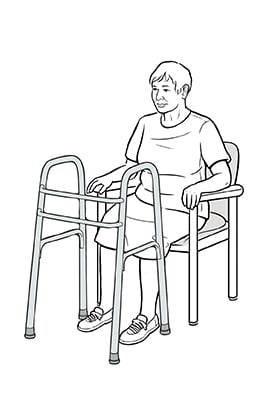
To protect your new hip, you must sit with your knees lower than or level with your hips. To do this, sit in chairs with high seats. Or you can place a firm pillow on the seat of a chair to help raise your hips.
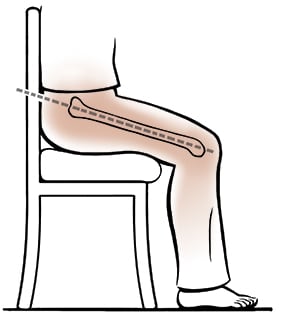
Side view of person seated in higher chair,  showing knee lower than hip.


To sit down

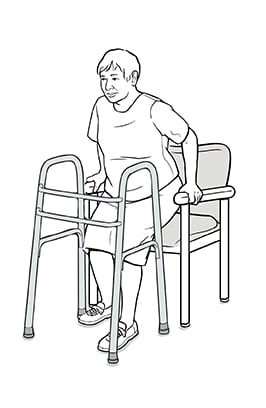
To sit down, back up until the edge of the chair touches your leg. Then, using the armrests to support your weight, lower yourself into the seat. Always keep out in front the leg that was operated on.
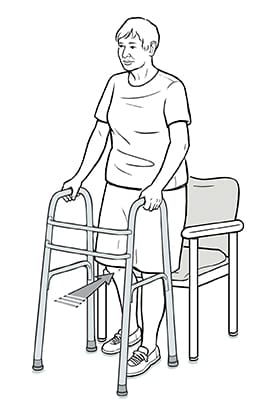
Person using walker backing up into chair so that chair touches back of legs.

Person with hands on arms of chair and lowering self into chair, keeping operated leg slightly out in front.

Person seated in chair with hips higher than knees.

Online Medical Reviewer: Rahul Banerjee MD

Online Medical Reviewer: Raymond Turley Jr PA-C

Online Medical Reviewer: Stacey Wojcik MBA BSN RN

Date Last Reviewed: 07/01/2023

© 2000-2026 The StayWell Company, LLC. All rights reserved. This information is not intended as a substitute for professional medical care. Always follow your healthcare professional's instructions.



Make an Appointment

Make an Appointment

Find a Doctor

Find a Doctor

Find a Location

Find a Location

Related Services

Orthopedics Center

Related Articles
Read article
Orthopedics
What to Expect: The Months After Amputation Surgery

Here's what to expect in the months after amputation surgery.

Read article
Orthopedics
Exercise After Knee Replacement Surgery

Strong, flexible muscles help protect your knee. Improve your strength and increase your range of motion by doing the exercises shown here.

Read article
Orthopedics
Wall Squats for ACL Healing

After you regain muscle control, it’s time to build strength. This helps you put full weight on your leg. For best results, warm up and stretch before starting. If your injury is recent, wait until swelling and pain decrease before doing this exercise.

Read article
Orthopedics
Taking Care of Your Limb After Amputation

Soon after surgery, you’ll be taught how to take care of your residual limb. This is the part of your limb that remains after amputation. Follow all directions from your care team closely.